Pakistan’s Swift Response to India’s Aggression: 4 Hours to Settle Scores and Expose Propaganda
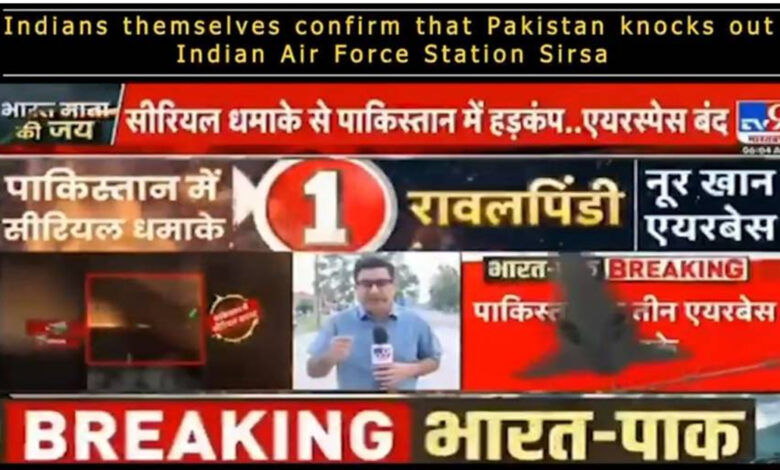
London:In a recent development that has caught global attention, experts and analysts have weighed in on the unprecedented actions taken by Pakistan’s armed forces in response to India’s provocations. While India continued to make baseless claims, engage in wars, and plot conspiracies, it was the Pakistan Army that settled the scores within just *4 hours*.
The Modi government and its allies had continued to boast of their military power, but within a matter of hours, the reality was starkly different. A failed satellite launch by India further exemplified their inability to succeed on both the diplomatic and military fronts. The failure of the EOS-09 satellite, which had been sent into space for the 101st time, was confirmed by Indian officials. The Indian Space Research Organization (ISRO) admitted to a technical fault in the launch vehicle during the third stage, resulting in the failure of the mission.


The aftermath of this setback has left a profound impact on Indian society. Many who had been unable to voice opposition to Modi’s government are now actively protesting. Even Indian women are sending “bangles” to express their discontent. There is growing dissent within the ranks of Indian military officers, with retired officials criticizing the government’s handling of military matters. Retired Major General (R) Shreevastava, along with other former officers, openly expressed their dismay over the treatment of the Indian military, particularly following their failure in Operation “Bunyan Marsous.”
Shreevastava pointed out that ministers like Vijay Shah of Madhya Pradesh and Deputy Chief Minister Jagdish Devda were openly insulting the military, which was unacceptable. He said, “The army bows only to Bharat Mata, not to politicians like Modi. Modi’s silence on this matter is shameful, and the mocking of the army’s sacrifices by these ministers cannot be tolerated.”
Furthermore, security experts argue that Modi’s administration is attempting to make military institutions political slaves, which is a dangerous agenda for the future of India. Pakistan’s military, on the other hand, has displayed unmatched professionalism, which crushed India’s warlike ambitions and military pride.
Adding to the tension, it was revealed that India had approached former spokesperson of the banned group “Fitenah Khuraj,” Ehsanullah Ehsan, to assist in spreading propaganda. Ehsan, who had previously worked with the Pakistani Taliban, wrote a false article in the Indian newspaper *The Sunday Guardian*, claiming that Pakistan was planning further attacks in Kashmir. However, Pakistani security sources rejected these claims, stating that such stories were part of a smear campaign to undermine the significance of Operation “Bunyan Marsous.”
In response to these failed attempts at propaganda, Pakistani authorities have firmly denied the allegations. Pakistan’s diplomatic efforts are now focused on exposing India’s ulterior motives. Prime Minister Shehbaz Sharif has already dispatched a diplomatic delegation to counter India’s narrative. The delegation, led by Foreign Minister Bilawal Bhutto, will visit London, Washington, Paris, and Brussels to expose India’s destabilizing efforts in the region. This delegation will aim to highlight Pakistan’s role in maintaining regional peace and counter the growing Indian aggression.
Meanwhile, the repercussions of India’s failed military actions and their orchestrated anti-Muslim hate campaign are becoming clearer. According to a recent report by the *Association for Protection of Civil Rights (APCR)*, the number of hate crimes against Muslims in India has dramatically increased. The report details over 180 hate-related incidents in just two weeks, many of which were directly linked to the ongoing tensions in Kashmir. This includes cases of violence, harassment, economic boycotts, and even forced evictions.
Despite the mounting pressure, experts believe that India continues to be a source of regional instability, and the world’s acknowledgment of its support for terrorism will not remain hidden for long. As diplomatic, military, and social challenges continue to mount for India, Pakistan remains steadfast in its commitment to peace and stability in the region.