OTT Reality Show Sparks Outrage in India Over Vulgar Content; Political Leaders Demand Action
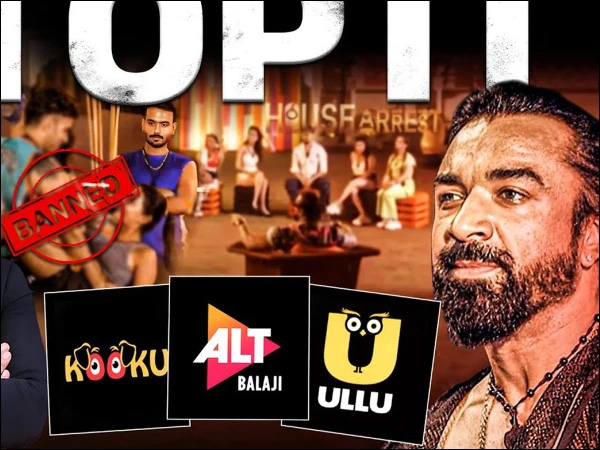
Mumbai:A recent reality show aired on India’s OTT platform “ULLU” has triggered massive public and political backlash due to its highly explicit content. The show, titled “House Arrest” and hosted by former Bigg Boss contestant Ejaz Khan, featured controversial segments where participants were asked questions related to Kamasutra positions and even prompted to demonstrate them on camera.
The viral clip from the show has ignited outrage on social media, raising serious concerns over the unregulated and increasingly bold content being streamed on Indian OTT platforms. The clip, widely condemned for breaching public decency, has led to renewed scrutiny of content moderation on these digital platforms.
Rajya Sabha MP Priyanka Chaturvedi from Shiv Sena (Uddhav Thackeray faction) shared the clip and questioned the Ministry of Information and Broadcasting on why platforms like ULLU and ALT Balaji continue to operate without facing any bans, despite repeated complaints. She emphasized that the government’s inaction is enabling the proliferation of obscene material.
BJP MP Nishikant Dubey also commented on the matter, assuring that he has raised the issue with the ministry, saying, “This will not be tolerated.” Similarly, BJP Yuva Morcha Bihar president Varun Raj Singh criticized the ministry’s silence and called for an immediate ban on such shows, stating, “They’re discussing sexual positions on camera while the ministry turns a blind eye.”
The issue has now reached the Supreme Court, which on April 28 issued a notice to the central government and various OTT and social media platforms, asking for clarification on measures being taken to curb the spread of pornographic content. The court deemed the issue “extremely serious” and a matter of public interest.
This is not the first time Indian OTT content has crossed ethical lines. In February, popular podcaster Ranveer Allahbadia came under fire for controversial remarks about parents and sex during a comedy show India’s Got Latent. Despite issuing an apology, he faced multiple police complaints, and the Supreme Court labeled his comments as “obscene” and “embarrassing to society.”
These developments have sparked a nationwide debate on regulating digital content and establishing ethical boundaries for online platforms. Public sentiment is increasingly in favor of stricter oversight to protect children and youth from harmful exposure. The question now remains: will the Indian government move beyond statements and take concrete action?