Elon Musk’s Starlink Revolutionizes Mobile Connectivity with Direct-to-Satellite Service
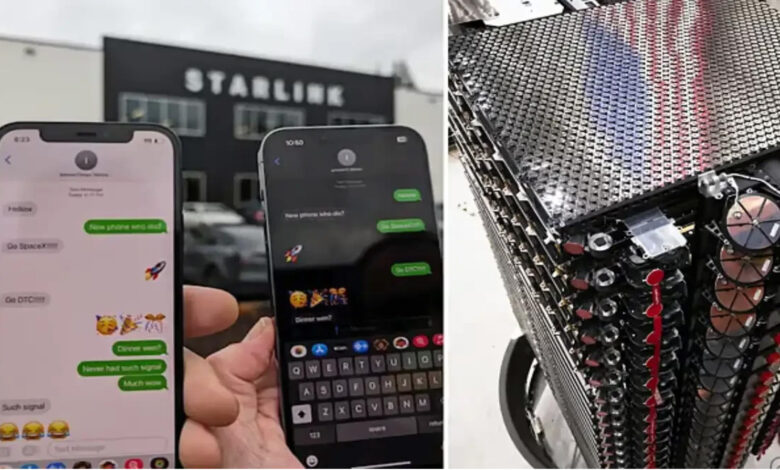
In a groundbreaking development for mobile communication, **Elon Musk’s Starlink** has introduced a revolutionary new service called **”Direct to Cell”**, enabling smartphones to connect directly to satellites without the need for additional devices or antennas. This service promises to significantly enhance mobile connectivity, especially in remote and underserved areas.
With **Direct to Cell**, **iPhone** and **Android** users can now make calls and send messages using their **LTE mobile phones**, even in places where there is no cell signal—such as mountains, forests, lakesides, or rural areas. This will be a game-changer for travelers, adventurers, and people living in hard-to-reach locations.

This week, **21 satellites** were launched into space from **NASA’s Kennedy Space Center** aboard a **Falcon 9 rocket**, 13 of which are equipped with **Direct to Cell** technology. Each satellite is fitted with a special **eNodeB modem**, functioning like a mobile tower in space. When your phone loses connection to local cell towers, it can now connect to these satellites for making calls or sending messages, similar to how you switch networks when traveling internationally.
### Which Phones Are Supported?
For now, **iPhone 14** and newer models, **Samsung Galaxy S23**, and certain **Google Pixel 9** models are compatible with the **Direct to Cell** service. Additionally, the service works if you are using the **T-Mobile network** in the United States.
### What Will the Service Cost?
While the pricing for this new service has not been officially announced, it is expected to be available on a **commercial basis**, potentially at a premium. This service will be particularly beneficial for individuals who frequently travel or reside in remote areas with limited network coverage.
### Availability and Future Prospects:
The **Direct to Cell** service is currently in the process of being rolled out gradually and is not yet available everywhere. At present, the system does not feature **native integration** with **Android phones**, but access is possible through **T-Mobile**’s network.
This revolutionary advancement in satellite-based mobile connectivity marks a new era for communications, making the world more connected than ever before, even in the most isolated regions.