Civilian Military Trial Case: How Can the Institution Be the Complainant and Judge? Justice Masarat Hilali Questions Delays in Trials
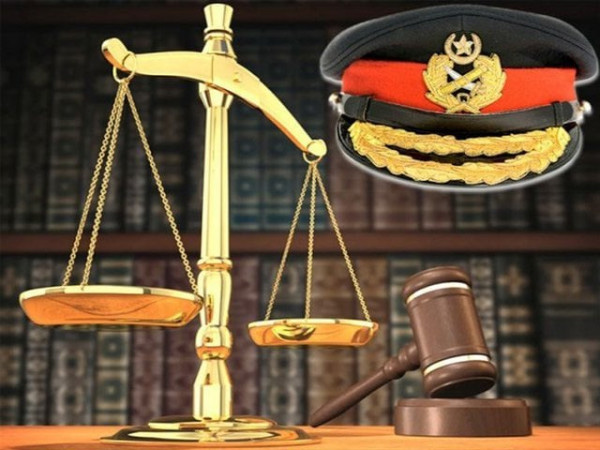
Islamabad: The Supreme Court heard the case regarding the nullification of civilian trials in military courts, with the issue being raised about whether an institution that is both the complainant and the judge can preside over the case. Justice Jamal Khan Mandokhail remarked that if any judge goes on leave, the whole system is shaken, raising concerns over delays in trials.
A seven-member constitutional bench, headed by Justice Amin-ud-Din, conducted the hearing. The bench included Justices Jamal Khan Mandokhail, Masarat Hilali, and Mohammad Ali Mazhar, alongside Justices Hassan Azhar Rizvi, Naeem Akhtar Afghan, and Shahid Bilal.
Attorney General Mansoor Awan appeared in court and explained that he had been summoned by the court after receiving information from the Additional Attorney General. He stated that the military trial process, including records, is available with the court. He added that in cases involving the death penalty, no action is taken until the appeal is decided.
Justice Jamal Khan Mandokhail emphasized that the discussion on the right to appeal was important as it is a fundamental right. The Attorney General responded that the issue had previously been addressed by the full court after the 18th amendment and had offered three options.
Justice Mandokhail inquired whether the right to appeal existed under those three options. Justice Mohammad Ali Mazhar clarified that the focus at that time was not on the appeal but on ensuring a fair trial. Justice Masarat Hilali pointed out that even if a judge goes on leave, delays are criticized, and trials are not expected to be postponed.
Justice Jamal Khan Mandokhail raised concerns about the fairness of military courts, questioning how the institution could act as both the complainant and the judge, asking if the federal and provincial governments did not trust their own institutions.
The Attorney General responded that both the judiciary and the executive are part of the system, and they must work together to address its shortcomings. He requested the completion of arguments by Khawaja, following which he would proceed with his response.
Justice Amin-ud-Din Khan suggested that if Khawaja’s arguments were completed today, the Attorney General could present his arguments the following day. Justice Hassan Azhar Rizvi humorously remarked that Khawaja was hoping for tomorrow.
The Supreme Court adjourned the hearing of the military courts case until the next day.