River Indus in Pakistan Allegedly Unveils Gold Worth Millions
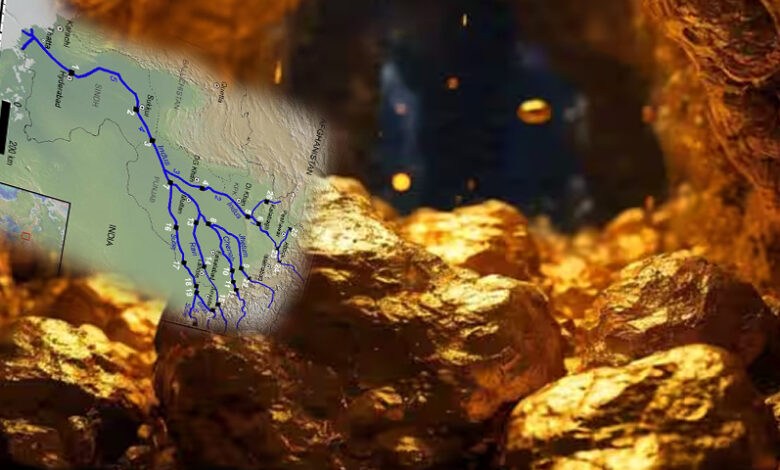
Islamabad:The Indus River, one of the world’s oldest and longest rivers, flowing from Tibet to Pakistan, has reportedly been yielding massive amounts of gold on a daily basis, surprising many and providing a potential financial boon for Pakistan’s struggling economy.
The Indus River, which has been integral to the ancient Indus Valley Civilization, is now emerging as a major source of wealth. The river once nurtured civilizations such as the Harappan Civilization, which thrived between 3300 and 1300 BCE along its banks. It is now said to be carrying immense quantities of gold, offering a glimmer of hope for Pakistan’s faltering economy.


Reports suggest that the river contains gold reserves worth millions of rupees, making it a potential ‘jackpot’ for the country, especially during these challenging economic times. The discovery of these reserves in the river, particularly in Punjab’s Attock district, has garnered attention, with some estimates suggesting the presence of treasures worth up to 600 billion Pakistani rupees.
The river, historically significant and culturally revered, flows from Tibet, passing through what was once part of India before the 1947 partition. It now moves through Pakistan, bringing with it substantial quantities of gold. The Indus is not only recognized for its historical and cultural importance but is also becoming known as a new source of wealth.
According to reports, the gold flowing into the Indus is carried by fast-moving waters from the northern mountainous regions, collecting in the riverbed over time. The gold, particularly placer gold, is believed to be accumulating at the river’s banks, particularly in areas near Attock.
Pakistan’s local government has been forced to enforce Section 144, banning illegal mining in the region due to the increasing illicit activities surrounding gold extraction. The Department of Interior of Punjab has acknowledged the potential benefit of the placer gold to the national economy.
During winter months, when the water levels in the Indus River drop, locals have been collecting gold particles illegally along the riverbanks, often using heavy machinery for extraction. Surveys by the Khyber Pakhtunkhwa provincial government have suggested that the gold being carried from the Himalayan region is accumulating around Peshawar.
Experts believe that the Himalayas were formed between 60 and 100 million years ago due to the collision of two tectonic plates, which also gave birth to the Indus River. Over centuries, the river has carried gold from the mountains, with the flow of water leading to the accumulation of gold particles along its banks, a process known as placer deposition.
According to one report, the total amount of gold flowing from the Himalayas into the Indus could amount to 32.6 metric tons. Punjab’s Minister of Mining, Ibrahim Hassan Murad, has confirmed that this treasure spans over a 32-kilometer area in Attock, estimated to be worth around 600 billion Pakistani rupees.