Pashtunkhwa Milli Awami Party Condemns Governor’s Rule in KP, Calls It an Assault on Public Mandate and Provincial Autonomy

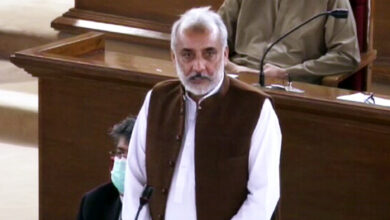
QUETTA: Pashtunkhwa Milli Awami Party (PkMAP) has strongly condemned the reported declaration of a national emergency and imposition of Governor’s Rule in Khyber Pakhtunkhwa, describing the move as an attack on the democratic mandate of the province’s people, their right to self-governance and the principles of federal parliamentary democracy.
In a statement, PkMAP Central Information Secretary Talemand Khan said the measures were contrary to the spirit of the Constitution and aimed at undermining the authority of the elected provincial leadership.
He said the move was not merely an administrative change but an attempt to weaken the elected political leadership, neutralise the people’s electoral choice, pressure the provincial government and use state power to control political activity, democratic dissent and public movements.
Khan maintained that using sensitive issues such as national security and law and order for political purposes amounted to denying people their right to govern themselves and undermining trust among the country’s federating units.
He alleged that the federal government, which he described as having come to power through Form 47, along with its coalition partners and their backers, was once again prioritising the wishes of undemocratic forces over the public mandate, parliamentary supremacy, constitutional rule and provincial autonomy.
“The power of guns and administrative coercion cannot replace the political will of the people,” he said, adding that the Pakistan Muslim League-Nawaz (PML-N), Pakistan Peoples Party (PPP) and their allies should recognise that disregarding democratic principles and undermining the public mandate could damage their political credibility and future.
The PkMAP leader said terrorism in Khyber Pakhtunkhwa and other parts of the country could not be used as a pretext to seize political power, weaken elected governments or suppress democratic forces.
He warned that using the law and order situation to curtail public representation and provincial autonomy would not eliminate terrorism. Instead, he said, it could deepen political unrest, intensify the federal crisis and widen the gap between the state and its citizens.
Khan stressed that countering terrorism required public confidence, constitutional supremacy, parliamentary oversight and a stronger democratic political process rather than stripping elected representatives of their authority.
He further warned that the political use of extraordinary powers in the name of a national emergency and Governor’s Rule could weaken the democratic system, violate provincial autonomy and undermine Pakistan’s federal parliamentary structure.
He said democracy was not limited to elections and the transfer of power; it also required respect for the people’s decisions, recognition of the constitutional status of elected governments, freedom of political disagreement and accountability of those in power to the public.
Khan appealed to democratic political parties, parliamentarians, lawyers, journalists, civil society organisations and democracy-minded citizens to rise above political affiliations and unite in defending the people’s mandate in Khyber Pakhtunkhwa, constitutional supremacy, provincial autonomy and the right to democratic self-governance.
He said defending the elected government’s right to govern in Khyber Pakhtunkhwa was, in fact, a defence of the federal and parliamentary democratic future of the entire country.
The PkMAP leader demanded the withdrawal of all measures aimed at neutralising the public mandate and the constitutional authority of the elected provincial government. He also called for national security and law and order matters to be handled in accordance with the Constitution, the law, parliamentary oversight and public confidence rather than through what he described as political engineering.
Khan concluded that popular sovereignty could not be suppressed through weapons, coercion or administrative orders, adding that Pakistan’s stability, survival and federal unity depended on constitutional rule, genuine democracy and respect for the rights of all federating units.