Field Marshal Asim Munir Arrives in Tehran as Pakistan, Saudi Arabia and Türkiye Push to Avert Regional War
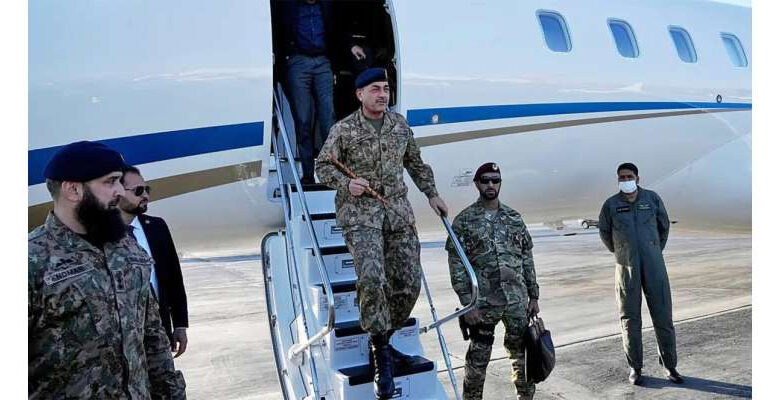
ISLAMABAD: Chief of Defence Forces and Chief of Army Staff Field Marshal Syed Asim Munir has arrived in Tehran as senior officials from Pakistan, Saudi Arabia and Türkiye engage with Iranian leadership in high-level diplomatic efforts to reduce escalating tensions in the Middle East and prevent a possible new war.
The diplomatic developments come amid rising tensions between the United States and Iran, while Israeli Prime Minister Benjamin Netanyahu has issued fresh warnings regarding potential military action against Iran.


According to reports attributed to Reuters and the Associated Press, senior delegations from Saudi Arabia, Pakistan and Türkiye held contacts with Iranian officials in Tehran on Monday, October 26.
The discussions reportedly involve Field Marshal Asim Munir, Saudi Defence Minister Prince Khalid bin Salman and Türkiye’s intelligence chief Ibrahim Kalin.
According to Reuters, the meetings mark an important round of high-level engagement with Iran following a joint defence agreement reportedly reached by the three countries in August.
The talks aim to ease regional tensions, explore new arrangements for regional security and identify diplomatic avenues to prevent a possible military confrontation involving Iran, the United States and Israel.
Pakistan Takes Diplomatic Initiative as Saudi and Turkish Officials Join Talks
According to Reuters, Pakistan’s diplomatic efforts helped initiate the latest contacts in Tehran.
The participation of Saudi Defence Minister Prince Khalid bin Salman and Turkish intelligence chief Ibrahim Kalin is considered significant amid rapidly changing regional security dynamics.
The discussions reportedly cover tensions between Iran and the United States, Israel’s regional policies, the situations in Palestine and Lebanon, and renewed fighting in Yemen.
Under the reported joint defence agreement reached by Pakistan, Saudi Arabia and Türkiye in August, an armed attack against one member is considered a security concern for the other participating countries.
The engagement with Iranian leadership following the agreement represents a significant diplomatic development, as the three countries seek to address shared security concerns and prevent further regional escalation.
Houthi Attack Claims on Saudi Arabia Add Urgency to Diplomatic Efforts
The Tehran meetings are taking place amid heightened security concerns following claims by Yemen’s Houthi movement that it has targeted several Saudi airports, oil facilities and a major pipeline.
Houthi military spokesperson Yahya Saree recently claimed attacks on King Khalid International Airport in Riyadh, King Fahd International Airport in Dammam, Najran Airport, Aramco facilities and the Rabigh oil refinery.
Saudi Arabia has reported intercepting some missile attacks, although the Houthi claims have not all been independently verified.
According to Reuters, direct diplomatic engagement between Saudi Arabia and Iran has become increasingly important as Riyadh faces potential security risks arising from the broader regional conflict.
The situation in Yemen and Saudi Arabia’s security concerns are also reportedly among the issues under discussion, while Pakistan and Türkiye are seeking to prevent further escalation.
Revival of US-Iran Negotiations Also on the Agenda
According to the Associated Press, the Tehran meetings have also addressed regional security and the prospects of resuming negotiations between Washington and Tehran.
Pakistan and Qatar have previously played important roles in diplomatic efforts aimed at reducing tensions and facilitating ceasefire arrangements between Iran and the United States.
A temporary understanding reached in June had sought to create conditions for discussions on the Strait of Hormuz, the US naval blockade and Iran’s nuclear programme. However, renewed hostilities subsequently disrupted the diplomatic process.
Iranian officials maintain that a lasting agreement would be difficult to achieve amid what they describe as excessive US pressure and unilateral demands. Washington, meanwhile, continues to press its demands concerning Iran’s nuclear programme and regional activities.
The latest diplomatic engagement is therefore being viewed as an opportunity to explore ways of restoring dialogue and preventing further military confrontation.
Israeli Political Developments Raise Fears of Further Escalation
The diplomatic activity in Tehran also coincides with parliamentary elections scheduled in Israel for October 27.
Israeli Prime Minister Benjamin Netanyahu warned on Sunday that Iran and its allies could undertake actions intended to disrupt the Israeli elections.
Netanyahu said Israeli forces were prepared for both defensive and offensive operations and would respond forcefully to any attack.
Iranian leaders, meanwhile, have warned that any new military action against the country would be met with a response, although Tehran has not completely ruled out diplomatic engagement.
According to the Associated Press, Qatari mediators also visited Tehran a day earlier as part of efforts to reduce tensions through contacts with Washington.
Regional Security and Global Oil Supplies at Stake
The joint diplomatic efforts by Pakistan, Saudi Arabia and Türkiye have assumed greater significance as the regional crisis threatens security, energy supplies and economic stability.
The three countries have a shared interest in protecting regional stability, maintaining the flow of oil through the Strait of Hormuz and limiting the economic consequences of a possible wider war.
The outcome of the high-level meetings in Tehran could have important implications in the coming days for Iran-US relations, Saudi Arabia’s security and broader efforts to prevent another military confrontation in the Middle East.
The precise outcomes of the reported discussions and any agreements reached had not been confirmed in the information available for this report.


