Macron Slams Trump and Netanyahu for Blaming Muslims for Unrest in France
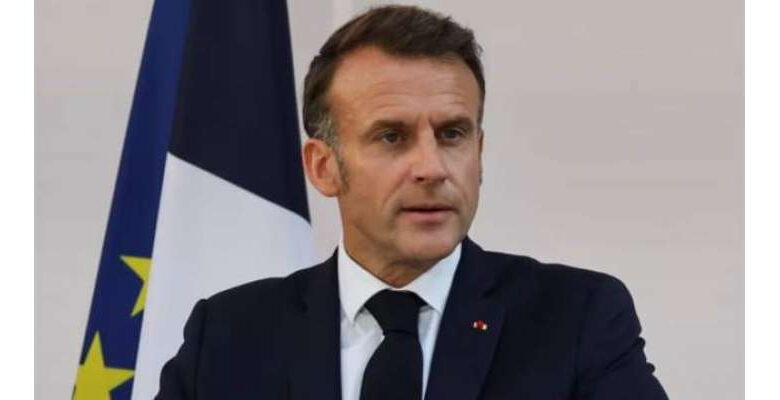
PARIS: French President Emmanuel Macron has strongly criticised US President Donald Trump and Israeli Prime Minister Benjamin Netanyahu for linking violent unrest in France to Muslims and immigrants, describing remarks by foreign leaders as “absurd” and unacceptable.
Speaking to journalists in Doha, Qatar, Macron said information about recent unrest in France had been distorted, prompting irresponsible statements from several people, including international leaders. He warned against using France’s domestic problems for political and electoral purposes.
According to reports by Agence France-Presse (AFP) and The Associated Press (AP), Macron did not initially name the leaders he was criticising. However, when asked whether his remarks were directed at Trump, he confirmed that the US president and other leaders were among those he had in mind.
Trump and Netanyahu Link Unrest to Immigration and Islamism
Trump had commented on the recent violence in France, attributing the unrest to immigrants, jihadist elements and communists. He also advised the French government to close its borders and take stronger measures to restore order.
Netanyahu, meanwhile, described the situation as an advance of radical Islam.
Macron rejected the suggestion that France was facing an invasion by Muslim immigrants or Islamists, arguing that such claims misrepresented the situation and risked inflaming tensions.
He said some foreign leaders were exploiting France’s internal difficulties to advance their own political interests ahead of elections in their respective countries.
The French president urged international leaders not to turn France into a subject of their election campaigns.
Macron Warns of Fake AI-Generated Videos
Macron also raised concerns about the spread of misleading information on social media, revealing that artificial intelligence-generated images and videos had circulated during the unrest.
According to the French president, some of the material depicted scenes that had not actually occurred in France, potentially misleading audiences about the scale and nature of the disturbances.
He argued that foreign leaders should verify information before making public statements based on unsubstantiated images or videos.
French Foreign Minister Jean-Noël Barrot also said France was prepared to provide relevant countries with factual information to counter false claims and misinformation circulating online.
Macron clarified that he was not attributing the original protests and violence to foreign interference. Rather, his criticism concerned the misleading narratives being spread internationally following the events.
Why Are Protests Taking Place in France?
The demonstrations described in the report were triggered primarily by rising inflation and the increasing cost of living.
Large protests took place across France on October 17, with workers’ organisations, students and other members of the public participating. While most demonstrations remained peaceful, some turned violent.
Clashes between police and protesters were reported in Paris, Marseille and other cities. Incidents of vandalism and looting were also reported, with several businesses sustaining damage.
The French government introduced additional security measures in some areas, including nighttime curfews and restrictions on public gatherings.
Macron condemned the violence while maintaining that the right to protest is an essential part of a democratic society. He stressed, however, that violence could not be justified under any circumstances.
More Protests Expected as Security Is Tightened
French authorities are preparing for the possibility of further demonstrations on October 24, with security arrangements expected to be strengthened.
Macron warned that authorities would take action against individuals attempting to exploit upcoming protests to provoke disorder in cities.
His latest remarks have intensified an international debate over immigration, the treatment of Muslim communities, political rhetoric and the growing influence of AI-generated misinformation on public opinion.
The French president’s intervention also highlights concerns about how domestic unrest can be portrayed internationally and used in political disputes, particularly when unverified social media content is presented as evidence.