Creation of New Provinces Still on the Agenda, Says Shahzad Iqbal After Meeting Key Figure
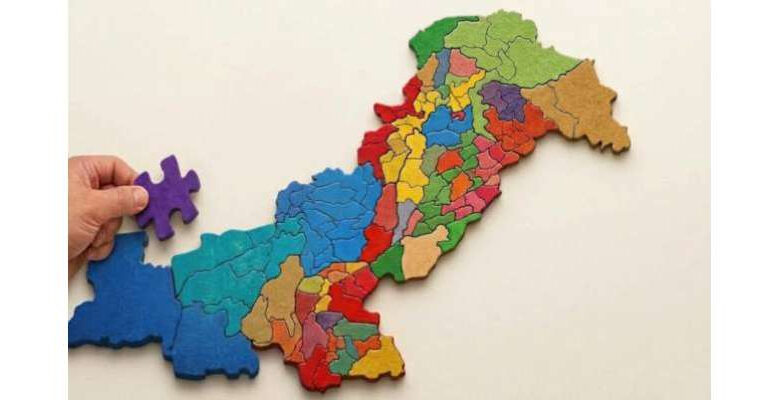
ISLAMABAD: Senior journalist and political analyst Shahzad Iqbal has claimed that the proposal to create new provinces and smaller administrative units in Pakistan has not been shelved and will eventually move forward, although no four- or six-month deadline has been set for the initiative.
Speaking on Geo News’ programme hosted by Shahzeb Khanzada, Iqbal said a key figure he met had rejected the impression that recent political developments had pushed the issue of new provinces into the background.

The discussion came amid questions about the evolving relationship between the Pakistan Peoples Party (PPP), the federal government and state institutions. Before the Pakistan Tehreek-e-Insaf’s long march, differences had appeared to be emerging over proposals for new administrative units, while the PPP had opposed any division of Sindh and passed resolutions against the move.
Responding to a question about whether the proposal had now been abandoned, Iqbal said he had raised the matter during a meeting with an influential figure earlier that day.
According to Iqbal, the individual told him that the proposal remained under consideration but would require gradual progress and the involvement of all political parties.
نئے صوبے بن کر رہیں گے ۔دیکھیے اہم شخصیت نے بلاول اور مریم کے حوالے سے شہزاد اقبال کو کیا بتایا https://t.co/5SHZnmSrT0
— Geo News Urdu (@geonews_urdu) October 15, 2026
“The work has to be done, but it must proceed gradually, taking all political parties along,” Iqbal said while explaining the position conveyed to him.
He stressed that no definitive four- or six-month deadline had been established for creating new provinces.
Zardari and Shehbaz Could Reach a Consensus
Discussing the political implications of the proposal, Iqbal said that, in his assessment, President Asif Ali Zardari and Prime Minister Shehbaz Sharif could reach a positive and logical conclusion on the matter.
He argued that both leaders understood the governance challenges facing the country under the existing administrative structure.
However, Iqbal cautioned that disagreements between PPP Chairman Bilawal Bhutto Zardari and Punjab Chief Minister Maryam Nawaz could strain the improving relationship between the PPP and the Pakistan Muslim League-Nawaz (PML-N).
He said the issue should not be viewed solely as a dispute between the two parties or as a matter involving the Bhutto and Sharif political families.
According to Iqbal, creating additional provinces could provide opportunities for emerging political leaders who might otherwise struggle to become chief ministers under the existing arrangement.
He argued that smaller administrative units could broaden political participation, bring new leadership to the forefront and potentially improve governance.
North, Central and South Sindh Among Possible Proposals
Addressing concerns about the possible division of Sindh, Iqbal said one proposal that could be considered was to designate new administrative units as North Sindh, Central Sindh and South Sindh.
He suggested that such naming could preserve Sindh’s name and historical identity while reducing perceptions that the province was being divided.
However, he did not present the proposal as an officially approved plan.
The PPP has historically opposed dividing Sindh, making the issue politically sensitive. Any attempt to alter the province’s boundaries would require substantial political support and compliance with constitutional requirements.
What Does the Constitution Say About Creating New Provinces?
Under Article 239 of Pakistan’s Constitution, a constitutional amendment must be passed by at least a two-thirds majority of the total membership of both the National Assembly and the Senate.
If an amendment seeks to alter the limits of an existing province, it must also be approved by at least two-thirds of the total membership of the affected provincial assembly.
Consequently, creating a new province by reorganising Sindh, Punjab, Khyber Pakhtunkhwa or Balochistan cannot be accomplished through a government announcement or an administrative order alone.
The constitutional process requires the relevant parliamentary approvals, including the consent of the affected provincial assembly where provincial boundaries are to be changed.
Debate Over New Provinces Is Not New
Demands for the creation of South Punjab, Bahawalpur and Hazara provinces have been raised repeatedly over several decades.
In 2012, the National Assembly passed a resolution concerning South Punjab and called for progress through the constitutional process. Proposals relating to a separate South Punjab province have also been discussed in the Senate’s Standing Committee on Law and Justice.
The proposals have involved a range of constitutional and administrative questions, including representation in national and provincial assemblies, Senate seats and judicial arrangements.
More recently, several political figures have supported the creation of additional administrative units as a possible way to improve governance. Federal Minister Abdul Aleem Khan has advocated establishing more administrative units in each province, while Prime Minister’s Adviser Rana Sanaullah has said that no formal government plan has been finalised.
Major Administrative and Financial Questions Remain
The creation of new provinces would involve much more than drawing new boundaries. Authorities would also need to address the distribution of government assets and liabilities, representation in legislatures, bureaucratic structures, police administration, High Courts, provincial capitals and shares under the National Finance Commission arrangements.
These issues would require detailed negotiations and constitutional and administrative planning before any proposal could be implemented.
Iqbal’s remarks are based on his account of a meeting with an unnamed influential figure and his own political assessment. As of the programme’s discussion, no final government plan, constitutional amendment or formal timeline for creating new provinces had been announced.
The proposal therefore remains a subject of political discussion rather than a confirmed government decision.


