Talks Broke Down Over Two Key Issues, Reveals PTI Secretary General Salman Akram Raja
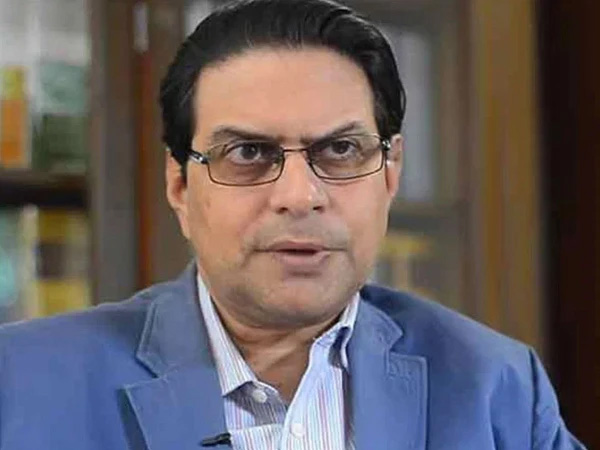
ISLAMABAD: Pakistan Tehreek-e-Insaf (PTI) Secretary General Salman Akram Raja has revealed that negotiations with the government broke down over two key issues, saying the two sides had come close to reaching an agreement before the situation suddenly turned into a deadlock.
Addressing a press conference in Islamabad alongside PTI lawyers, Salman Akram Raja said the government ministers were making irrelevant statements about the negotiations and that two rounds of talks had ended without producing a result.
He said the PTI had placed two major demands before the government, including a meeting with PTI founder Imran Khan, stressing that the party would not make any decision without consulting its founder.
According to Raja, one of the major sticking points was the issue of terrorism in Khyber Pakhtunkhwa. He said the PTI had demanded that the political parties’ peace jirga be heard, arguing that rejecting its recommendations would not be a wise approach.
Raja said the PTI would present documents from the peace jirga, which carried signatures of representatives from the Pakistan Muslim League-Nawaz (PML-N), Awami National Party (ANP) and other political parties.
He said political parties and tribal elders had participated in the jirga and presented their views on resolving problems in the tribal areas. Decisions concerning the region, he added, could not be made by people sitting far away from the affected areas.
The PTI secretary general said the negotiating teams had worked through the draft agreement point by point. He claimed that Federal Interior Minister Mohsin Naqvi left the meeting several times during the discussions.
According to Raja, the two sides had agreed on several points by around 8pm, but disagreements later emerged over access for doctors and the issue of a 72-hour period.
He said another key demand was immediate access to Imran Khan, adding that the PTI had been assured that if an agreement was reached, lawyers and Imran Khan’s sisters would be allowed to meet him on Tuesday and meetings would subsequently be restored.
Raja said the issue of a meeting with Allama Nasir Abbas was also discussed.
He claimed that the government had agreed in principle to release prisoners if an agreement was reached, while discussions regarding the release of elderly and female detainees were also progressing positively.
He said these developments had created the impression that the negotiations were close to success, but the talks eventually broke down over access for Imran Khan’s personal doctors and the Khyber Pakhtunkhwa issue.
Raja said the PTI had demanded that decisions concerning the tribal areas be taken through consensus and consultation with all stakeholders. He also said the government did not agree to include Imran Khan’s personal physician, Dr Faisal Sultan, in the medical panel.
“These were important issues. How could negotiations succeed without resolving them?” Raja asked.
He maintained that the issues of terrorism in KP, meetings with Imran Khan’s family and access for his personal doctor remained important matters for the PTI.
Regarding the proposed long march, Raja said Sohail Afridi was leading it and the PTI would stand by him. He said any decision concerning Khyber Pakhtunkhwa should be taken through consultation with all stakeholders.
Raja urged the government not to turn a situation that was close to resolution into further confrontation.
“We were close to resolving the issues that day, but suddenly closeness was turned into distance,” he said, adding that the government’s refusal to allow access to personal doctors and its unwillingness to work on a mutually agreed course of action had created the deadlock.
Meanwhile, speaking to the media at the Islamabad High Court, Imran Khan’s lawyer Barrister Salman Safdar alleged that not a single Supreme Court decision had been implemented and that several Islamabad High Court decisions had also not been followed.
He said reaching the Islamabad High Court had now become extremely difficult and questioned why the case was not being fixed despite the heightened situation.
Barrister Salman Safdar said the IHC’s fixation branch normally did not schedule cases, but argued that the case should be fixed given the current circumstances.