What Is the Pakistan Air Force’s New China-Türkiye-Backed Defense System Against Drones?
ISLAMABAD: The Pakistan Air Force (PAF) has strengthened its short-range air defense capabilities with a layered system combining Chinese missile technology with Turkish gun-based and counter-drone systems, apparently aimed at addressing the growing threat posed by drones and loitering munitions.
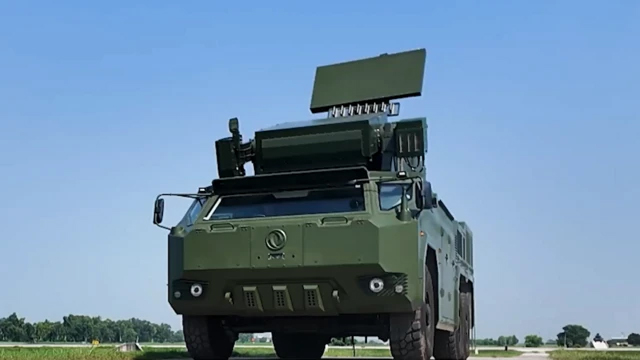
A video released by the PAF on September 7 showed three different air-defense systems: China’s HQ-17AE short-range surface-to-air missile system, Türkiye’s ASELSAN KORKUT 35mm self-propelled air-defense gun system, and ASELSAN’s ŞAHİN 40mm counter-drone system.


The systems are designed to work together as a layered defensive shield to protect important military installations against a range of low-altitude threats, including drones, loitering munitions, helicopters, cruise missiles and low-flying aircraft.
How Does the Layered Defense System Work?
The basic concept of the three-layer short-range air-defense system is to avoid relying on a single weapon. Instead, different systems are deployed at different ranges, giving defenders multiple opportunities to detect, track and destroy an incoming threat before it reaches its intended target.
According to defense analyst Farooq Chaudhry, available open-source information suggests that the PAF has combined several gun-based layers with the Chinese HQ-17AE missile system to counter drones and other low-altitude aerial threats.
The reported gun-based layers include the ŞAHİN 40mm system, intended for short-range engagement of small drones, the KORKUT 35mm system, with an effective range of around four kilometers, and potentially the LD-76 76mm system, which could provide a further outer gun-based layer with a range of around 10 kilometers.
However, Chaudhry noted that the LD-76 was not officially shown in the PAF video. He said an earlier image of an official PAF shield featuring the LD-76 alongside the Pakistani and Chinese flags could indicate possible future procurement, although this has not been officially confirmed.
First Layer: Chinese HQ-17AE
The outer missile layer is provided by the Chinese-made HQ-17AE, a mobile short-range surface-to-air missile system designed to engage aircraft, helicopters, drones, cruise missiles and other aerial targets.
Its mobile configuration allows it to be deployed at different locations. Within the reported defensive architecture, the HQ-17AE can engage threats at a greater distance before they reach the closer gun-based layers.
Second Layer: Turkish KORKUT 35mm
The second layer consists of Türkiye’s KORKUT 35mm automatic air-defense gun system, developed by ASELSAN.
Mounted on a tracked platform and equipped with two 35mm automatic cannons, KORKUT can use programmable airburst ammunition. The rounds can explode in the air and create a fragmentation pattern capable of engaging drones, loitering munitions and other low-altitude targets.
Such gun-based systems can offer a relatively cost-effective option against large numbers of comparatively inexpensive drones, reducing the need to use expensive missiles against every small aerial target.
Final Layer: Turkish ŞAHİN 40mm
The innermost layer is the ŞAHİN 40mm counter-drone system, specifically designed to counter small and very small unmanned aerial vehicles.
The system incorporates radar, electro-optical sensors and an automated fire-control system and uses 40mm airburst ammunition to engage targets at close range.
It is intended to serve as the final defensive shield around critical installations, targeting small aerial threats that manage to penetrate the outer layers.
PAF’s Changing Air-Defense Strategy
Defense analyst Farooq Chaudhry said that until 2025, the PAF had traditionally relied heavily on fighter aircraft and other air capabilities for air defense. However, the increasing use of drones and other aerial weapons has pushed the force toward greater investment in ground-based air defense.
The three recently displayed SHORAD systems appear to be part of this broader strategy, with the PAF placing greater emphasis on short-range systems capable of dealing with drones and other low-altitude threats.
The reported rapid integration of these systems into the PAF’s defensive structure also reflects the growing urgency of counter-drone capabilities.
Why Layered Air Defense Matters
The increasing use of drones and loitering munitions in recent conflicts has highlighted the difficulties faced by conventional air-defense systems. Small drones can be relatively inexpensive, difficult to detect and deployed in large numbers, creating a cost challenge for defenders.
Layered air defense seeks to address this problem by combining missiles, automatic guns and counter-drone technologies. Depending on the target’s size, range and characteristics, commanders can select the most appropriate defensive system rather than relying on expensive missiles against every threat.
Chinese Missiles and Turkish Guns
The combination of Chinese missile technology with Turkish gun-based systems also highlights Pakistan’s expanding defense cooperation with both China and Türkiye.
The reported architecture is intended to provide an integrated base-defense capability capable of responding to different aerial threats, ranging from small drones to low-flying cruise missiles and other weapons.
Is the System Sufficient Against Every Air Threat?
The new systems are primarily designed for short-range and low-altitude threats and therefore cannot be considered a complete replacement for Pakistan’s broader air-defense network.
According to Chaudhry, the systems would not provide adequate protection against very high-speed cruise missiles such as the BrahMos, meaning other air-defense capabilities would be required against such threats.
The new SHORAD systems should therefore be viewed as one component of Pakistan’s wider air-defense architecture, in which different capabilities are required to counter threats at varying ranges and altitudes.
The integration of short-range missiles, automatic guns and counter-drone technology demonstrates how the growing use of drones is reshaping modern air-defense priorities, with the objective of creating a more diversified, layered and cost-effective response to evolving aerial threats.