State Must Hear Pashtuns’ Voice and Protect Their Fundamental Rights, Says Mahmood Achakzai
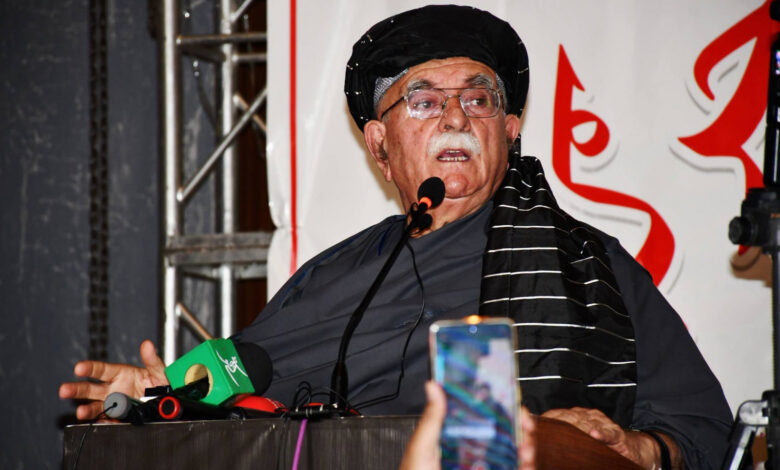
QUETTA: Pashtunkhwa Milli Awami Party (PKMAP) Chairman, Tehreek-e-Tahafuz-e-Aain Pakistan (TTAP) head and Leader of the Opposition in the National Assembly Mahmood Khan Achakzai has called on the state to listen to the Pashtun people’s demands for their constitutional, political, economic and national rights.
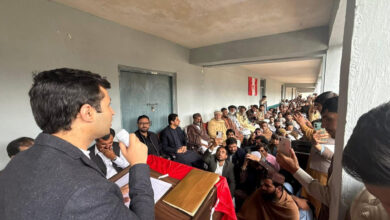
Addressing the inaugural session of a three-day public jirga of Southern Pashtunkhwa, held at the Quetta Grand Kababish Banquet Hall under the chairmanship of Nawab Ayaz Khan Jogezai, Achakzai warned that the state should not force the Pashtuns to take their case to international forums.
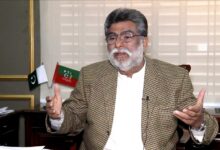
He said neither a state system could be permanently run through the use of force nor could the political consciousness, constitutional rights and resources of the people be controlled indefinitely through coercion.
Achakzai said Pashtuns were passing through an extraordinary period marked by political uncertainty, economic hardship, deteriorating law and order and deprivation of their resources and powers. He described the jirga as a platform for public opinion, collective wisdom and consultation rather than merely a forum for political parties.
Referring to history, he said Pashtuns had traditionally convened jirgas during difficult times to find solutions to collective problems through consultation. He maintained that the same spirit of political awareness and collective decision-making was needed today.
The opposition leader said Pakistan had completed 79 years of existence, while Pashtuns had inhabited their present homeland for thousands of years. He argued that the country’s political, economic and security problems could not be treated as the fate or destiny of any nation, as such conditions were the result of human-made political, economic and administrative systems that could also be changed through political struggle and better governance.
He said Pashtunkhwa was rich in natural resources and minerals, but its resources and geographical and strategic importance had increasingly become a source of hardship rather than prosperity for its people.
Achakzai stressed that the jirga was not directed against any nation, ethnicity or religion. He said Pashtuns did not believe in hatred or discrimination against any community but would not accept their homeland being turned into a battleground for wars, proxies or the competing interests of other powers.
Expressing concern over insecurity in Southern Pashtunkhwa, he said the lives and property of Pashtuns were not adequately protected. Referring to an attack on a police station in Saranan and the killing of workers, he said those responsible must be held accountable.
He said protecting the lives and property of citizens was the state’s fundamental responsibility and warned that failure to fulfill this responsibility would deepen public insecurity, mistrust and deprivation.
Achakzai also alleged that the lands of local communities and tribes were being systematically allocated to non-local individuals, institutions and companies. He said such practices could not be accepted and warned that people’s land and resources could not be seized through force.
On relations between the major communities of Balochistan, Achakzai said, “The Baloch are our brothers,” adding that he wanted Balochistan to be governed on the basis of equality, justice and mutual respect between the Baloch and Pashtun peoples.
He proposed a fair administrative and political formula under which all communities and citizens would enjoy equal rights and said Pashtuns were even prepared to count sectors of Quetta inhabited by Hazara and other urban communities within the Pashtun share if this contributed to a just arrangement.

Discussing the regional situation, Achakzai criticized the treatment of Afghanistan primarily as a security issue at international forums. He said Afghanistan’s people and genuine representation should be included in discussions concerning the country’s future.
He argued that regional instability could not simply be attributed to Afghanistan, saying that conflicts from the Cold War through the so-called war on terrorism had also been shaped by the strategic policies, interests and rivalries of major and regional powers.
He appealed to the leaders of Shanghai Cooperation Organisation member states and the United Nations secretary-general to view Afghanistan not merely as a security problem but as a humanitarian issue. He said the Afghan people had suffered decades of war, intervention and destruction and deserved peace, stability, human dignity and development.
Achakzai said Southern Pashtunkhwa’s people would continue their peaceful and democratic struggle for political, constitutional, economic and national rights.
“We are not against anyone; we are standing up for our rights. We do not want anyone else’s land or rights, but neither will we surrender our land, resources, identity or constitutional rights,” he said.
He urged the state to replace force and coercion with the principles of the Constitution, Parliament, democracy, public mandate and national equality, warning that sustainable peace, political stability and economic development could not be achieved by continuously ignoring people’s fundamental rights.
Achakzai also expressed grief over the incident at PIMS Islamabad and called for a transparent, impartial and comprehensive investigation, with those responsible identified and dealt with according to law.
He further expressed solidarity and sympathy with people affected by floods in Nepal and Tibet and offered condolences to the victims and their families.