Pakistan’s Trade Deficit Reaches $32.19 Billion in Nine Months: Parliamentary Committee Briefed
Islamabad: Pakistan’s trade deficit has reached $32.19 billion during the first nine months of the current fiscal period, according to a briefing presented to the National Assembly Standing Committee on Finance.
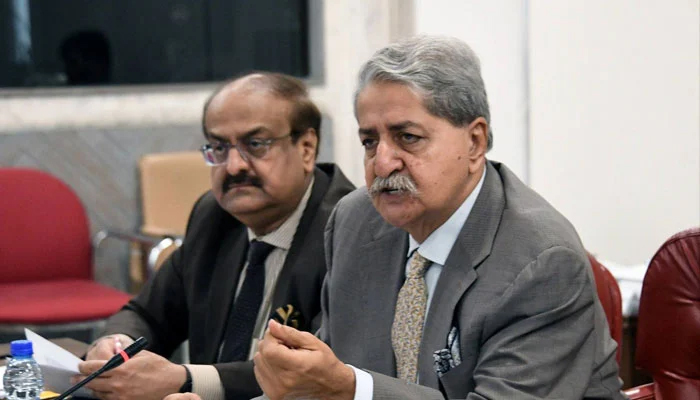
The meeting of the committee, chaired by Naveed Qamar, was held in Islamabad where officials provided an overview of the country’s economic indicators and structural challenges.


During the briefing, the committee was informed that Pakistan’s tax system has undergone multiple changes, moving from a normal tax regime to a system where both percentage-based and fixed mechanisms are currently being implemented.
The committee chairman remarked that there was a time when it was said that “NAB and Pakistan cannot go together,” and now “FBR and Pakistan cannot function together,” highlighting concerns over institutional performance.
Officials also informed the committee that circular debt in the gas and power sector has reached Rs 5.1 trillion by February 2026.
Economist Ali Salman stated that the circular debt in the gas sector has nearly doubled over time.
The committee was further briefed that the policy interest rate has increased from 10.5 percent to 11.5 percent, while unemployment among youth has reached 12.5 percent. Unemployment among young women has also risen above 13 percent.
The briefing revealed that the poverty rate has increased from 22 percent in 2018 to around 30 percent, while some estimates, including from social protection data sources, suggest it may have reached as high as 43.5 percent.
Income inequality in the country was reported at 33.5 percent, according to the data presented.
Officials also highlighted that illegal trade and counterfeit goods pose a major threat to the economy, harming tax collection and local industries through smuggling and fake markets.
The committee was also informed that floods, regional tensions, and rising agricultural costs are putting pressure on food security, with increasing food prices and climate-related challenges contributing to a growing risk of food insecurity in the country.