Transgender Job Quota in Sindh Stalled Over Mandatory Physical Examination Requirement
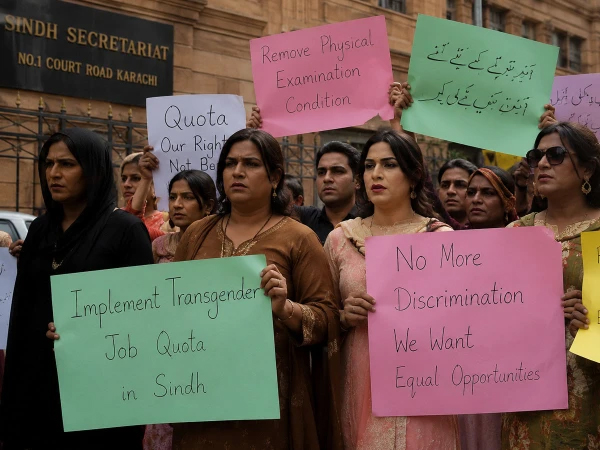
KARACHI: The implementation of a government job quota for transgender persons in Sindh has remained stalled for nearly four years, mainly due to a controversial legal requirement mandating physical examinations to verify gender identity.
Members of the transgender community have termed the condition discriminatory and humiliating, while the provincial government maintains that fulfilling legal requirements is necessary to ensure transparency in the recruitment process.
In July 2022, the Sindh Assembly passed the Sindh Civil Servants Amendment Bill, reserving a 0.5 percent quota in government jobs up to Grade 15 for transgender persons living in the province. However, the law also made it mandatory for applicants to undergo a physical examination by a standing medical board.
Under the legislation, the medical board is responsible for verifying the applicant’s gender identity and issuing a certificate, which must then be submitted to the relevant government department while applying for jobs.
Zahrish Khanzadi, operational manager of the Gender Interactive Alliance and a transgender rights activist based in Karachi, criticized the requirement, calling it outright discrimination against the transgender community.
Speaking to The Express Tribune, she questioned why transgender individuals are required to present gender verification certificates for employment when no such condition exists for men or women applying for government jobs.
She said transgender people had already faced years of difficulty in obtaining national identity cards before finally gaining legal recognition, but their struggles within state institutions continue.
Khanzadi also questioned the need for physical examinations when gender identity is already clearly mentioned on National Database and Registration Authority (NADRA) identity cards.
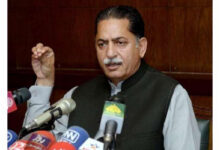
Meanwhile, Sukh Dev Hemnani, a member of the Sindh Human Rights Commission and spokesperson for the Sindh government, defended the provision, saying the purpose of the physical examination was to ensure transparency so that only genuine applicants benefit from the reserved quota.
He stated that implementation of the law has begun and pointed out that the Excise and Taxation Department recently included the transgender quota in a recruitment advertisement for vacant posts. However, only applicants possessing the required medical certificate would be considered eligible.
The transgender community has also expressed concerns over the size of the quota itself, arguing that 0.5 percent is insufficient.
Khanzadi explained that under such a ratio, transgender individuals may not secure even a single job out of 100 vacancies, since 0.5 percent amounts to only half a position. She added that Punjab has reserved a 2 percent quota for transgender persons in government jobs and suggested Sindh should follow suit.
Responding to the criticism, Hemnani said the quota had been determined according to the transgender population in Sindh and therefore could not be increased. However, he acknowledged that the quota could be applied to the total number of vacancies across departments, and recommendations could also be made to expand the number of available positions.
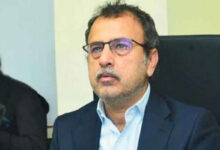
Human Rights Commission of Pakistan Vice Chairman Qazi Khizar also supported the transgender community’s stance and urged the Sindh government to abolish the “discriminatory” physical examination requirement from the law.
He further recommended reserving at least one percent of government jobs for transgender persons, similar to the dedicated transgender seats allocated in local government structures.
Conflicting figures regarding the transgender population in Sindh also remain a concern. According to the 2023 digital census, Sindh’s transgender population stands at 4,222, while a 2017 survey conducted by the National AIDS Control Programme estimated that Karachi alone had 9,123 transgender individuals.
Khanzadi, however, claimed unofficial estimates place the transgender population in Sindh at around 55,000, including more than 18,000 in Karachi alone.