Balochistan High Court Approves Four-Day Workweek, Salary Cuts and 50% Reduction in Fuel and Paper Use
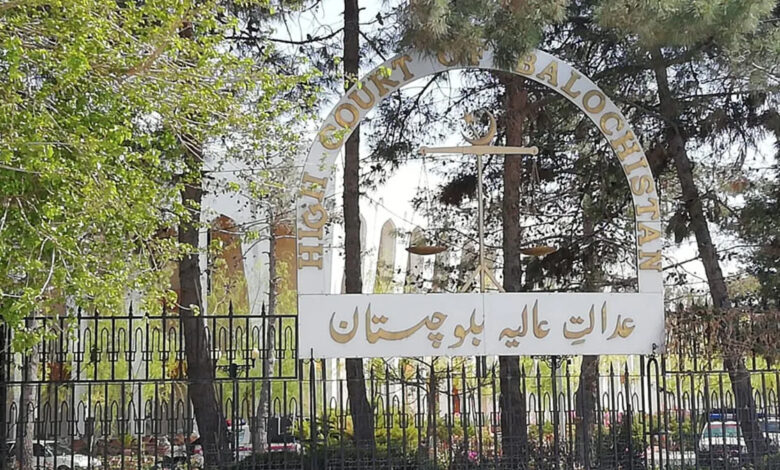
Quetta — The Balochistan High Court has approved several major administrative reforms, including the implementation of a four-day working week, voluntary salary cuts for senior officials, and a significant reduction in fuel and paper consumption.
The decisions were taken during an all-judges meeting chaired by Justice Muhammad Kamran Khan ملاخیل, following a virtual meeting of the National Judicial Policy Making Committee. The meeting endorsed a seven-point agenda presented by the Law and Justice Commission of Pakistan, aimed at promoting efficient use of public resources and energy conservation.


Under the new policy, the high court will observe a four-day working week from Monday to Thursday, while only urgent cases will be heard on Fridays. Court staff will work on a rotational basis on Fridays and Saturdays. Similar arrangements will be implemented in district courts, where regular cases will be heard from Monday to Thursday, while only urgent matters such as remand, bail, and Habeas Corpus petitions will be taken up on Fridays and Saturdays.
To cut operational expenses, the court also approved a 50 percent reduction in the use of fuel (POL) and paper for high court judges and administrative staff. District courts will initially implement a 30 percent reduction, which will later increase to 50 percent.
The meeting also agreed on voluntary salary deductions for senior officials and judges in Basic Pay Scale (BPS)-20 and above earning more than Rs300,000 per month. Two days of their basic salary will be deducted as part of the initiative.
Additionally, to modernize the judicial system, e-court facilities will be installed in all session divisions within two weeks, allowing lawyers and litigants to participate in hearings via video link. Half of the court’s administrative staff will also perform duties on a rotational basis to reduce commuting costs.
Judges described these measures as a step toward responsible governance and national efforts to conserve energy and public resources.