Lahore’s Road Excavations and Sewerage Projects Raise Fears of Increased Smog
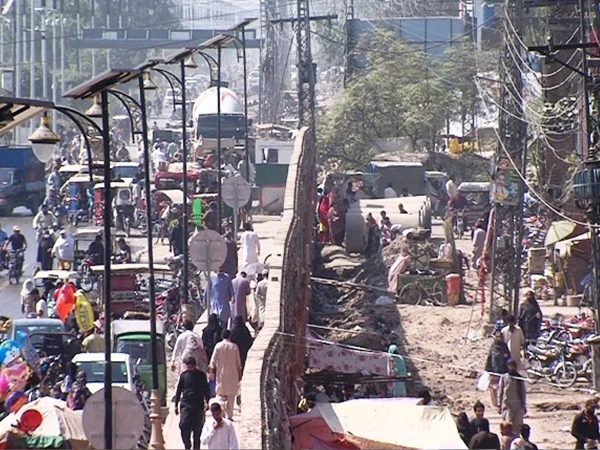
LAHORE: Ongoing development projects across Lahore have sparked both hope for improved civic facilities and concern over rising air pollution, as road excavations, sewerage line installations, and poor safety measures continue to disrupt daily life and pose environmental risks.
Experts warn that dust, debris, and stagnant sewage water from these construction sites could worsen **smog levels** in the coming weeks. The large-scale installation of sewerage lines along **GT Road from Quaid-e-Azam Interchange to Wagah Border** has been underway for months. Locals appreciate the project’s intent but complain that a lack of precautionary measures has caused severe dust pollution.


Residents **Ali Hamza**, **Abdul Majeed**, and **Zulfiqar Ali** said that constant digging and heaps of debris have made daily life difficult. “We support the development work, but the dust and foul water are spreading diseases—especially respiratory illnesses among children and the elderly,” they remarked.
Another resident, **Ghulam Abbas**, suggested regular water sprinkling in construction zones to reduce dust and the temporary restoration of old drainage lines to prevent waterlogging.
Beyond GT Road, development projects are also active in **Samanabad**, **Shahdara**, **Iqbal Town**, and **Johar Town**, where many contractors are reportedly ignoring environmental protection standards. No protective green nets or **EPA clearance signs** were observed at most sites.
According to the **Environmental Protection Agency (EPA)**, actions are being taken against contractors violating standard operating procedures (SOPs). However, simultaneous work at dozens of locations has made monitoring difficult.
Meanwhile, Lahore’s **Air Quality Index (AQI)** was recorded at **175 in the morning** and averaged **155 throughout the day**, placing it in the “unhealthy for sensitive groups” category. Low wind speeds (1–8 km/h), high humidity, and a lack of rainfall have limited pollutant dispersion, while nighttime traffic and increased fuel consumption further worsened air quality.
Senior provincial minister **Maryam Aurangzeb** emphasized that maintaining clean air requires both government enforcement and public cooperation. “The government can legislate, but implementation depends on collective responsibility. A healthy environment is possible only through community participation,” she said.
Environmental experts caution that without mandatory environmental safeguards in development projects, Lahore’s air quality could deteriorate further as **winter approaches**—a period historically linked to intensified smog.