Bilateral Tensions Escalate: Bilawal Bhutto Zardari Warns of Nuclear Threat from India
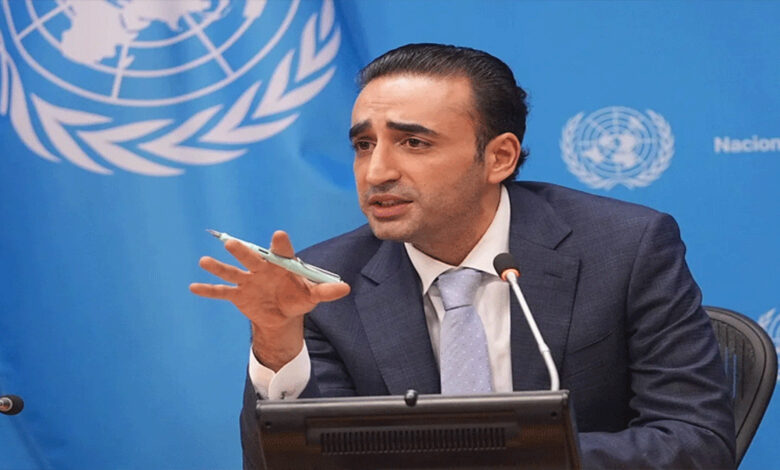
Washington:LIn an exclusive interview with Bloomberg, **Bilawal Bhutto Zardari**, the Chairman of the **Pakistan Peoples Party** and former Foreign Minister, expressed deep concerns about the increasing tension between Pakistan and India, particularly highlighting the recent use of **nuclear-capable missiles by India**. Bilawal warned that this development has escalated the situation to a critical level, suggesting that the use of such advanced weaponry could significantly alter future conflict dynamics.
According to Bilawal, India’s deployment of **supersonic missiles** armed with **nuclear capabilities** poses a new and dangerous threat that could dramatically shorten response times in future conflicts.

> “In the future, when tensions rise, we will have only about **30 seconds** to determine whether the missile is nuclear-capable, and how to respond accordingly,” Bilawal said. “This will introduce an unprecedented risk in the already volatile situation.”
### Potential for Rapid Escalation
Bilawal further warned that in a future conflict, **both countries could cross thresholds** much faster than before, possibly before **global leaders**, including then-President **Donald Trump**, have an opportunity to intervene. This raises the stakes for **international diplomacy** in the region.
> “Both countries could quickly escalate to a level where even diplomatic intervention might not have time to stop the conflict,” he emphasized.
### Rising Nuclear Threat
A week earlier, an Indian military official had downplayed the risks of an **atomic confrontation**, stating that the **May conflict** between the two nuclear-armed neighbors did not bring them “close to nuclear war.” However, Bilawal’s remarks cast a shadow on this narrative, highlighting the **increased risks** posed by nuclear missile technology in future confrontations.
In the wake of the **four-day conflict** in May, both Pakistan and India have sent delegations to various international capitals, defending their positions. Bilawal, leading a team of Pakistani officials in Washington, is engaging with **US lawmakers** and former diplomats. Meanwhile, an Indian opposition delegation led by **Shashi Tharoor** is also conducting meetings in the US capital.
### Concerns Over Terrorism and War Allegations
A significant aspect of the recent tensions, Bilawal pointed out, is **India’s approach** to regional security under Prime Minister **Narendra Modi**’s government. He expressed concern over India’s **”unsubstantiated allegations”** in cases of terrorism within **India or occupied Kashmir**, which could potentially trigger full-scale conflict without the need for evidence.
> “The Modi government seems to be setting a dangerous precedent,” Bilawal said. “They are creating a situation where merely an accusation of terrorism — without any evidence — could be enough to start a war with Pakistan.”
He stressed that **dialogue and negotiation** between the two nuclear neighbors is of **utmost importance** to avoid catastrophic consequences.
### Call for Comprehensive Dialogue
Bilawal reiterated that **comprehensive and inclusive talks** between **Pakistan and India** were vital for regional peace and stability. He urged both nations to set aside differences and engage in dialogue to address the underlying issues that continue to fuel tensions.
As the international community watches closely, Bilawal’s remarks serve as a stark reminder of the volatile situation in South Asia, where the **threat of nuclear conflict** looms over the ongoing political and territorial disputes. The need for diplomacy, according to Bilawal, is not just a matter of security but of **survival** in a region already fraught with tension.