Imran Khan Appears to Be the Only Political Option Amid Growing Political Crisis: Hafizullah Niazi
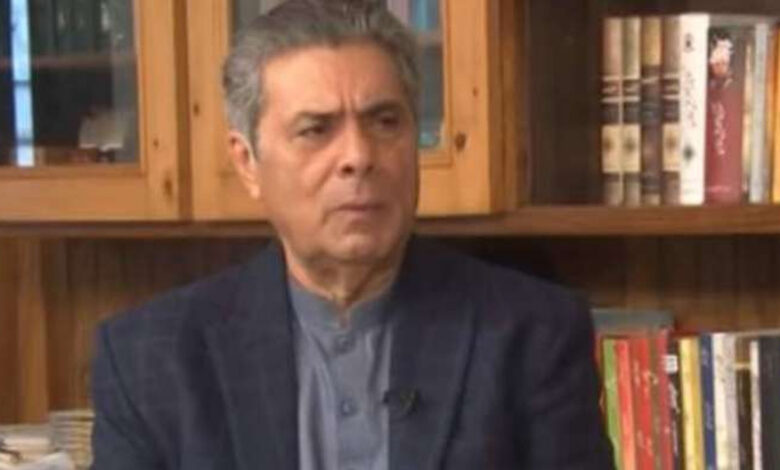
ISLAMABAD:Political analyst Hafizullah Niazi has said that Imran Khan appears to be the only available political option amid growing political instability in Pakistan, arguing that internal conflicts and political miscalculations have further deepened the country’s crisis.
In a post on social media platform X, Niazi said that political tensions within government circles had reached their peak, describing the situation as a competition of hypocrisy among those in power.

He remarked that whether due to circumstances or a twist of fate, no alternative to Imran Khan appeared to be available by default.
Niazi said that, in his assessment, Imran Khan, Shehbaz Sharif and other political parties shared responsibility for bringing the country to its current situation, adding that they had all contributed to the establishment of the existing hybrid system.
### Political Tensions and Internal Conflicts Intensify
The analyst said Pakistani politics had witnessed several major developments over the past few months.
He referred to tensions surrounding the proposed construction of six canals, which had already strained political relations, saying that a speech by Special Representative Mohsin Naqvi had reignited controversy in Sindh over the creation of new provinces or administrative units.
According to Niazi, the issue further intensified differences between the establishment and the Pakistan Peoples Party (PPP), which responded strongly to the controversy.
He also referred to the political developments in Khyber Pakhtunkhwa, particularly the imposition of governor’s rule, saying the move had created additional difficulties for the government by bringing a fresh confrontation with PTI.
Niazi said the confrontation with JUI-F chief Maulana Fazlur Rehman had opened another political front.
He also mentioned allegations of corruption levelled against Maryam Nawaz’s government by Chaudhry Salik, as well as Senator Faisal Vawda’s reported six-month warning to Prime Minister Shehbaz Sharif to improve the situation or face consequences.
The analyst described these developments as largely self-created crises, arguing that their underlying causes could be traced to the same centres of decision-making.
### Establishment’s Political Position Becoming Increasingly Complicated
Hafizullah Niazi said it was not necessary to view every political development as part of a single master plan.
He suggested that some developments might be the result of political manoeuvring, others of internal divisions and conflicting interests, while several could simply reflect a series of poor decisions.
However, he argued that their combined impact was pushing the establishment deeper into political difficulties.
He said confidence among political parties in the establishment had further weakened, relations with the PPP had deteriorated, a more complicated crisis had emerged in Khyber Pakhtunkhwa, and unnecessary confrontation with Maulana Fazlur Rehman had created another political challenge.
### Comparison With General Musharraf’s Political Decline
Referring to history, Niazi recalled that former military ruler General Pervez Musharraf’s action against Chief Justice Iftikhar Muhammad Chaudhry in March 2007 marked the beginning of his political downfall.
He argued that the current circumstances pointed towards an even more serious crisis.
According to Niazi, those in powerful positions should have remained cautious about the advice and actions of their close associates, but he feared that it might already be too late.
### Calls for Political Reconciliation
The analyst said political instability had intensified and argued that the only way forward was to bring Imran Khan and all other major national political forces together to find a path towards reconciliation.
He stressed the need to involve all political stakeholders in efforts to address the country’s challenges.
Niazi said political developments were not necessarily the result of organised conspiracies, explaining that political parties often pursued their own interests, while decisions made in corridors of power could produce unintended consequences.
He added that history had repeatedly shown that powerful rulers were often weakened not by revolutions or foreign conspiracies but by their own mistakes and decisions.
Concluding his remarks, Niazi questioned who would ultimately be held responsible when the current political struggle came to an end.
He said the real question was not who would win the political contest, but who would stand accountable before history for the country’s worsening situation.
Tighten this into a sharper news reportMake the headline more neutral


