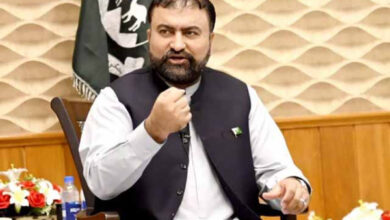
“A Government With Access to Only a Few Seats and Limited Constituencies Cannot Claim to Represent Balochistan; How Will Those Who Compromise the Sanctity of the Vote Fight for Resources, Provincial Autonomy, and Rights?” — Senator Maulana Abdul Wasey
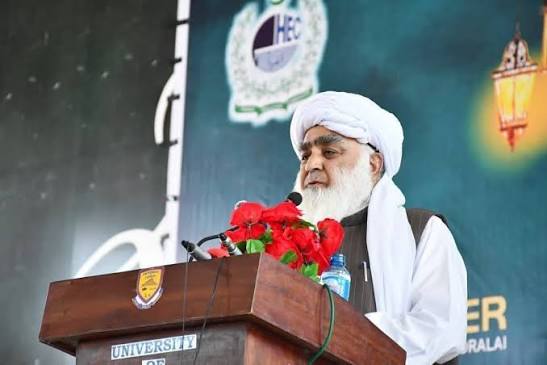
Quetta (Daily Qudrat Quetta) — Jamaat-e-Islami (JUI) Balochistan Provincial Ameer Senator Maulana Abdul Wasey and General Secretary Agha Mehmood Shah have said that JUI Balochistan is the only political party whose organizational structure, political roots, and public acceptance exist uniformly across the length and breadth of the province, and which has the right to genuine and comprehensive political representation of Balochistan’s different regions, classes, and nations. In contrast, the claim of parties with political influence limited to a few districts or limited electoral constituencies to represent all of Balochistan is contrary to both political reality and ground realities.
The representation of Balochistan is not the name of a few seats of a particular constituency, presence in the corridors of power, or a government office; rather, it demands broader public mandate, political trust, constitutional rights, and effective articulation of the province’s collective interests. Those who gain power as a result of electoral arrangements and political engineering that render the public mandate controversial in elections cannot become the true representatives of Balochistan merely by occupying the seat of power. Those who can compromise on the public right of representation, the sanctity of the vote, and the trust of the mandate — with what principled force will they fight the case of public resources, provincial autonomy, constitutional authority over mineral and natural resources, economic rights, and the future of the people of Balochistan?


The public mandate is not the grant of any individual or party but a trust of the voter; betrayal of this trust injures both political credibility and democratic reputation. The politics of Balochistan should be founded on the principles of a transparent electoral process, constitutional supremacy, and public sovereignty, instead of closed-room understandings, palace conspiracies, interference by power centers, and non-transparent formulas of power-sharing. Unfortunately, some elements, draped in the robe of democracy, promoted a politics in which the acquisition of power, rather than the public decision, became the central objective.
When an attempt is made to alter public opinion through electoral engineering, interest-based compromises, and behind-the-scenes political manipulation, the constitutional structure of democracy remains in place, but its spirit is wounded. The Form 45 and Form 47 controversy has become a prominent metaphor for the basic questions arising from this electoral crisis and the health of the mandate. This matter is not limited merely to a difference between two electoral forms but is a question of electoral transparency, the sanctity of the vote, the supremacy of the public decision, and democratic credibility.
The culture of putting a price on conscience in the marketplace of power and weighing political loyalties on the scale of interests weakens the democratic institutions of any society from within. The people of Balochistan are now not ready to accept this political arrangement merely on the basis of slogans and claims. Their political consciousness has now established a clear distinction between representation and power, mandate and artificial majority, public authority and palace decisions. Therefore, the measure of the political credibility of any party or individual will not be its official office but its public mandate, principled stance, political struggle, and practical role for the collective rights of Balochistan.
JUI Balochistan will not compromise on the public right of sovereignty, a transparent electoral process, a genuine democratic mandate, provincial autonomy, constitutional right over resources, and the protection of Balochistan’s collective interests. The people of Balochistan will continue to challenge, on an intellectual basis, the credibility of all those political actors who made the public mandate a means of trading in power, because in political history, offices are temporary, power arrangements keep changing, but public trust, the sanctity of the vote, and principled politics are the only standards before which every artificial mandate is ultimately exposed.