Nation Must Unite to Overcome Challenges, Remain Steadfast in Implementing Jirga Decisions: Nawab Ayaz Jogezai
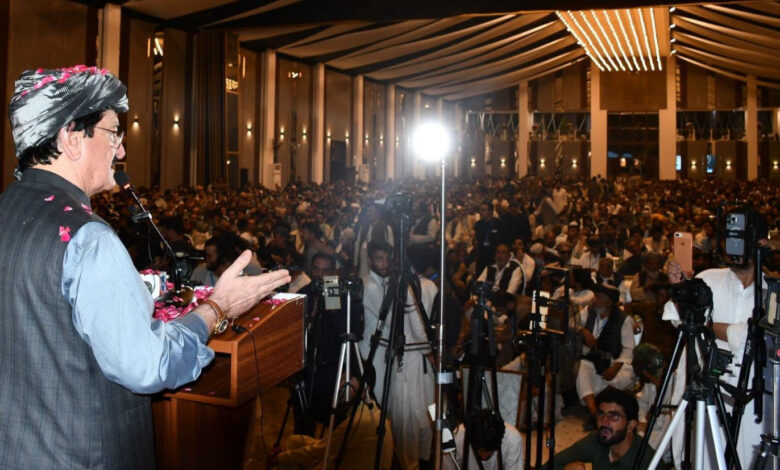
QUETTA: Convenor of the Pashtun National Jirga and central secretary of the Pashtunkhwa Milli Awami Party (PkMAP), Nawab Muhammad Ayaz Khan Jogezai, has called for unity among the Pashtun people to overcome the challenges facing the nation, stressing that the decisions taken by the three-day jirga must be implemented through organized and sustained efforts.
Addressing the concluding session of the three-day Pashtun National Jirga in Quetta, Nawab Ayaz Jogezai said detailed discussions were held on almost every major political, economic, social, constitutional and national issue confronting the Pashtun people.
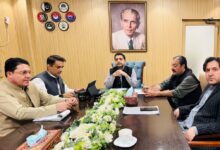
He said the participation of representatives from different regions, tribes, political parties and various walks of life with seriousness, discipline and national spirit was a source of hope for the future of the Pashtun nation.
Nawab Ayaz Jogezai said the Pashtun people must first develop unity within their ranks to overcome their difficulties. “Simply blaming others will not change the condition of the nation,” he said, adding that self-accountability, education, organization, continuous struggle and adherence to collective decisions were essential for the progress of any nation.
He said political, tribal and personal differences had their own place, but all Pashtuns must stand united on issues concerning national survival, peace, dignity, land, resources and the future of coming generations.
He said elders, youth, women, religious scholars, lawyers, traders, farmers, transporters, social workers and professionals were given an opportunity during the three-day jirga to present their views and suggestions. All recommendations would be compiled and incorporated into a future national roadmap, he added.
The PkMAP leader stressed that a jirga should not merely be an event for gatherings and speeches but should serve as a platform for collective decisions, responsibilities and practical struggle.
Nawab Ayaz Jogezai also called for an end to outdated social customs in Pashtun society, particularly excessive dowry-related demands and lavish wedding expenses. He said demands for three, four or even five hundred thousand rupees or more had created serious difficulties for poor families and young people, making marriage unnecessarily difficult.
He urged elders, religious scholars and youth to work together to discourage harmful traditions and unnecessary extravagance.
Speaking about women’s rights, he said Islam had clearly granted women rights to dignity, inheritance and property, but in several parts of Pashtun society daughters and widows were still deprived of their Shariah and legal rights.
“No brother, father or family has the authority to deprive a woman of her rightful share,” he said, adding that national progress was impossible without ensuring women access to education, inheritance, protection, dignity and an appropriate role in decision-making.
Nawab Ayaz Jogezai said the jirga should give fundamental importance to protecting women’s rights and eliminating harmful social practices.
He said people living in Pashtun areas rich in natural resources were still deprived of basic facilities including electricity, gas, clean drinking water, education, healthcare and employment.
He pointed out that in many areas schools existed without teachers, while hospitals had buildings but lacked doctors, medicines and essential facilities. Even ambulances were often unavailable in emergencies, while access to justice had become difficult and expensive for ordinary citizens.
“It is unacceptable to keep the people of resource-rich areas trapped in poverty, backwardness and unemployment,” he said.
Expressing concern over rising inflation and increases in taxes, petroleum products, medicines and prices of essential commodities, Nawab Ayaz Jogezai said the burden of economic policies was being disproportionately placed on the poor and middle classes.
He said ordinary citizens were paying the price of loans and financial crises, while effective accountability for corruption and misuse of resources remained inadequate. Transparent governance, equal enforcement of the law and indiscriminate accountability of corrupt elements were essential for economic development, he added.
Regarding agriculture, he said farmers were facing serious difficulties due to rising prices of tractors, agricultural machinery, seeds, fertilizers and electricity. He said some loan schemes introduced in the name of supporting farmers ultimately pushed them further into debt because of high interest rates and complicated conditions.
He demanded that the rights of local communities, farmers and tribes be fully protected in agricultural and land-related policies and warned that people should not be deprived of their ancestral lands in the name of development projects.
Nawab Ayaz Jogezai said educated youth were unemployed despite possessing professional qualifications and were being forced to move to other provinces or abroad due to a lack of decent employment opportunities in their homeland.
He said the nation needed to struggle for a system in which education was not merely a means of obtaining degrees but also provided young people with opportunities for employment, research, skills development and national service.
He said the jirga’s resolutions would be presented before relevant forums, while elected representatives, including Leader of the Opposition in the National Assembly Mahmood Khan Achakzai, would raise the issues of the Pashtun people in Parliament.
He stressed that contacts and coordination should not end after the jirga and called for a permanent mechanism comprising representatives from districts, tribes and different sectors to monitor progress on the decisions taken.
“If the nation remains organized, united and committed to its decisions, positive change can be brought about even under the prevailing circumstances,” he said.
Nawab Ayaz Jogezai thanked all participants, political and tribal elders, women, youth, journalists, social media workers, Grand Kababish administration, security volunteers, medical staff and members of various administrative committees for their cooperation in the successful organization of the jirga.
He said participants had demonstrated patience, discipline and a sense of national responsibility throughout the three-day gathering and had presented practical suggestions along with highlighting their problems.
“This jirga is not an end but the beginning of a new collective struggle for a peaceful, united and dignified future of the Pashtun nation,” he concluded.