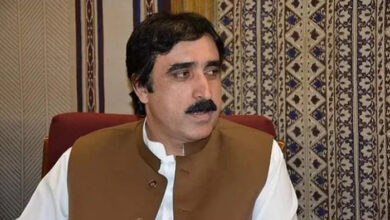
“Balochistan’s Problems Have Exceeded the Limits of Serious National Dialogue; The Hybrid System Experiment Has Proven a Complete Failure” — Maulana Abdul Wasay
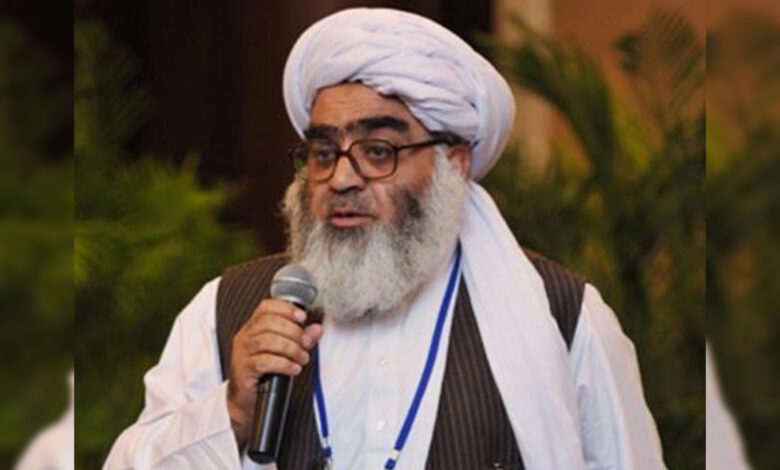
Quetta (Daily Qudrat) — Ameer of Jamiat Ulema-e-Islam Balochistan, Senator Maulana Abdul Wasay, has said that Balochistan’s problems have reached a point where even the issues on which a serious national dialogue was possible a decade ago have now become alarmingly complex, while if the same approach continues, there will be no room left for discussion even on the matters that can be talked about today. He said that the root cause of Balochistan’s crisis is the continuous lack of seriousness regarding the resolution of the problem, political coldness, and the continuity of policies based on temporary interests. In every era, workable proposals were presented for a lasting solution to the province’s problems, but they were deliberately ignored, while instead of resolving the real issues, new interpretations and artificial narratives continued to be fabricated.
He said that the experiment of the hybrid system has proven completely failed, and both the people and the state have paid a heavy price for this failed experiment. The manner in which the public mandate was made a mockery in the last general elections and the electoral process before it — the unease, political instability, and mistrust arising in Balochistan today are the direct results of this. If the state truly desires sustainable peace, political stability, and national unity in Balochistan, then the only way is the unconditional restoration of the public mandate, the holding of transparent, free, and impartial fresh elections, and complete respect for the people’s right to rule.


He said that instead of accountability for its own policies and wrong decisions, character assassination of political leadership and holding it responsible for the problems is not only contrary to democratic values but is also an extremely dangerous trend for the country’s political future. These same elements have, in various periods, kept trying to make elected political leadership controversial, weaken parliamentary institutions, and prove the democratic system ineffective.
The only way to end the growing gulf between Balochistan and the federation is confidence-building, and the first condition of confidence-building is respect for public opinion through free, transparent, and impartial elections. Political engineering, artificial majorities, and the politics of bargaining have continuously pushed the province into a quagmire of crises. Therefore, the time has now come that no compromise be made on the Constitution, democracy, and public authority, and that the misleading narrative be categorically rejected that Parliament does not have the capacity to resolve provincial problems — because the reality is that when true public representation is snatched away, it is these very forces whose narrative is strengthened, forces that want to see the parliamentary system and democratic institutions weakened.