Hormuz Tensions Disrupt Shipping as Oil Tankers Reroute and Thousands of Seafarers Remain Stranded
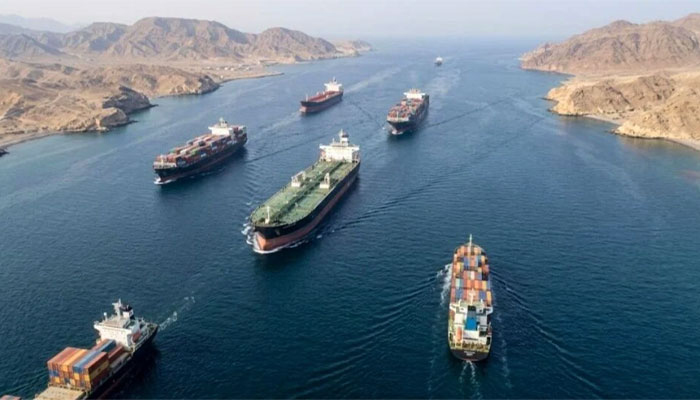
Islamabad: Rising tensions between Iran and the United States in and around the Strait of Hormuz are beginning to affect global shipping and energy supplies, with several oil and liquefied natural gas (LNG) tankers altering their routes and thousands of seafarers reportedly remaining stranded in the Gulf.
According to reports cited from international media, at least four oil and gas tankers changed course after alleged attacks on three commercial vessels near the Strait of Hormuz. The reported attacks have not been independently verified.


Shipping data cited by Reuters indicated that three LNG carriers—Al Ghariya, Duhail, and Al Ruwais—were en route to Qatar’s Ras Laffan export terminal before changing course. The vessels, operated by QatarEnergy, had been traveling empty to load LNG cargoes.
An Indian-flagged crude oil tanker, Lila Vadinar, carrying around two million barrels of Kuwaiti crude oil, also reportedly turned back near the coast of Oman instead of continuing through the Strait of Hormuz.
Ministry of Foreign Affairs Summons Iran's Deputy Ambassador, Delivers Protest Note Over Targeting of Qatari Tanker Al Rekayyat
Doha | July 7, 2026
The State of Qatar expressed its strong condemnation and denunciation of the targeting of the Qatari tanker Al Rekayyat while it… pic.twitter.com/f8wuU3kMv6
— Ministry of Foreign Affairs – Qatar (@MofaQatar_EN) July 7, 2026
Earlier, Qatar lodged a formal protest with Iran after a Qatari LNG tanker was reportedly targeted near the strategic waterway, describing the incident as a serious threat to international shipping, global energy supplies, and international law.
Despite the heightened tensions, some vessels continue to transit the strait. The crude oil tanker Mercury Hope reportedly passed through the waterway carrying approximately two million barrels of crude oil from the United Arab Emirates. A Japanese tanker also completed its transit, while Indonesia’s supertanker Pertamina Pride sailed through carrying two million barrels of crude oil, although reports said its tracking transponder was switched off during part of the voyage.
Maritime analytics firm Kpler reported a modest recovery in shipping traffic through the Strait of Hormuz, with 41 vessels passing through on July 7, compared with 36 the previous day. However, the company warned that recent tanker-related incidents near Oman and tighter U.S. sanctions linked to Iranian trade have increased concerns over maritime security, sanctions compliance, and navigational risks.
Hormuz recovery faces fresh pressure
Traffic through the monitored Strait of Hormuz zone strengthened on 7 July, with 41 verified crossings compared with 36 the previous day. Commercial west to east movements continued to dominate, while sanctioned vessel activity eased and… pic.twitter.com/4dIwg8WQoZ
— Kpler (@Kpler) July 8, 2026
The International Maritime Organization (IMO) said around 6,000 seafarers aboard hundreds of ships remain in the Gulf, facing heightened uncertainty and security concerns. IMO Secretary-General Arsenio Dominguez said the recent incidents have intensified psychological stress and made it difficult for some vessels to safely leave the region.
Analysts also pointed to disagreements between Washington and Tehran over the implementation of a memorandum of understanding (MoU) concerning navigation through the Strait of Hormuz. According to commentators, Iran maintains that while the waterway should remain open, commercial vessels should coordinate their transit with Iranian authorities during a transitional period. The United States, however, argues that ships can use internationally recognized shipping lanes without requiring Iranian permission.
Experts say the lack of clarity over the scope of acceptable actions under the current arrangements continues to fuel uncertainty, raising concerns that the ongoing tensions could further disrupt global energy markets and maritime trade.