Pakistan Faces Deepening Education Crisis as Over 25 Million Children Remain Out of School
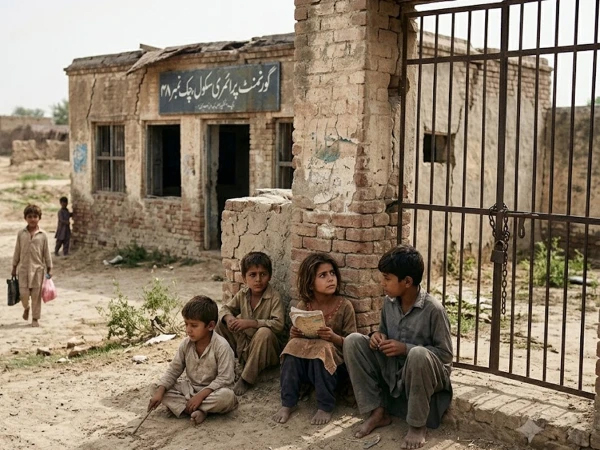
ISLAMABAD: More than 25 million children in Pakistan remain out of school due to poor governance, inadequate funding, and long-standing structural challenges, according to the latest policy report released by the Civil Services Academy.
According to local media reports, two years have passed since the federal government declared an education emergency, yet the country’s education targets remain largely unmet because of fragmented administrative structures and persistent systemic issues.

The report states that implementation of the roadmaps developed under the National Education Action Plan 2026 has been severely lacking, preventing meaningful progress in improving access to education.
Data from the Pakistan Institute of Education indicates that poverty, rapid population growth, and insufficient investment in the education sector have contributed to the crisis for decades. Between 1990 and 2010, educational infrastructure failed to expand in line with population growth, resulting in increased reliance on private educational institutions.
The policy report, prepared by policy groups of the Pakistan Administrative Service Campus, provides a comparative assessment of the education system across the country.
According to the report, between 25.1 million and 26 million children are currently out of school, highlighting Pakistan’s continued struggle to fulfill the constitutional guarantee of free and compulsory education under Article 25-A.
Punjab has the highest number of out-of-school children, with estimates ranging from 9.6 million to 10.4 million. Of these, around 6.4 million have never attended school, while approximately 3.16 million dropped out before completing their education, underscoring the dual challenge of enrollment and student retention.
The report also highlights province-specific challenges. Sindh continues to struggle with high dropout rates after primary education, Khyber Pakhtunkhwa faces security concerns and geographical barriers, while Balochistan is dealing with weak institutional capacity and a large number of non-functional schools. Although educational indicators are comparatively better in the federal territories, internal disparities in access to quality education remain a significant concern.
The findings underscore the urgent need for coordinated reforms, increased public investment, and effective implementation of national education policies to address Pakistan’s growing education crisis.