Asad Qaiser Alleges Farmer Exploitation and Constitutional Breakdown in Pakistan
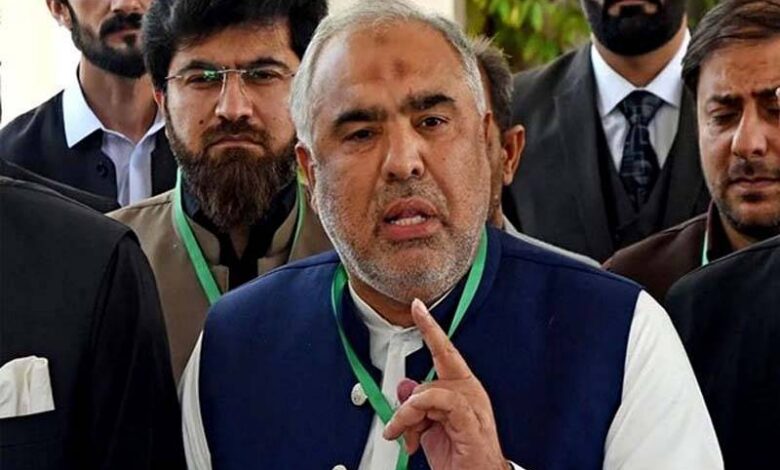
Islamabad: Pakistan Tehreek-e-Insaf (PTI) leader Asad Qaiser has said that wheat, cotton, sugarcane, and potato farmers in Punjab are facing exploitation, despite the province being the country’s largest agricultural producer.
Speaking to the media, he claimed that there is effectively no rule of law or constitutional governance in the country, alleging that Pakistan is being run according to personal preferences and that the situation is worsening by the day.


Asad Qaiser said that two provinces are currently facing conditions similar to conflict zones, adding that rising extremism and growing anti-Pakistan sentiments in certain regions are deeply concerning. He linked these issues to what he described as flawed domestic and foreign policies.
Referring to Punjab’s agriculture sector, he said wheat farmers are being forced to abandon cultivation due to lack of support and fair pricing. He added that cotton and sugarcane growers are also not receiving government-mandated rates, while potato farmers have suffered losses due to lack of proper storage facilities, forcing them to dispose of their produce.
He also raised concerns over electricity supply, stating that power generated from the Tarbela power station located in Swabi should be directly supplied to local areas instead of being routed through distant networks, resulting in low voltage and long outages. He claimed that Khyber Pakhtunkhwa is currently facing up to 18 hours of load shedding daily.
The PTI leader further said that the province is facing a shortfall of Rs159 billion under the National Finance Commission (NFC) Award, while also bearing the financial burden of the former FATA merger without adequate federal support.
He alleged that justice from the courts has become increasingly difficult to obtain and reiterated his party’s stance on the cypher issue, claiming that their position has been proven correct.
Concluding his remarks, he emphasized national unity, stating that all ethnic groups—including Punjabis, Pashtuns, Sindhis, Baloch, and Saraikis—are brothers, and true unity can only be achieved if the constitution and rule of law are respected.