Scientists Uncover Key Clue to Mars’ Lost Water
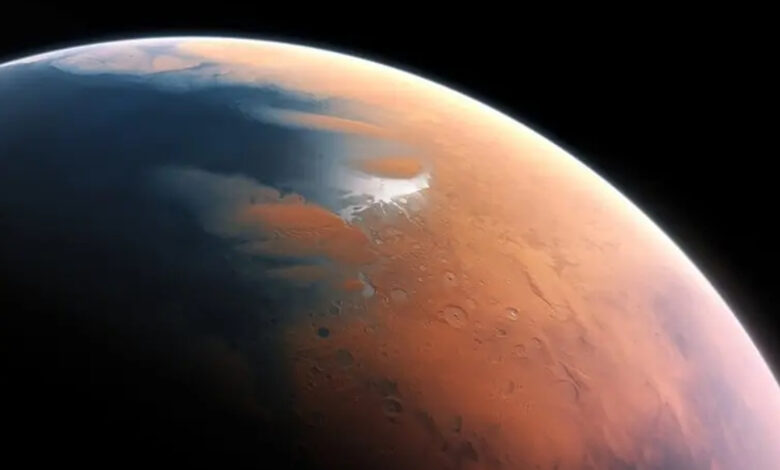
Researchers have discovered an important clue explaining why Mars, once home to rivers and lakes, became the cold, dry desert it is today. For years, planetary scientists have puzzled over how the Red Planet underwent such a dramatic transformation.
A recent study reveals that dust storms on Mars played a crucial role in the disappearance of its water. Powerful regional dust storms lift water vapor to higher layers of the atmosphere, accelerating the escape of hydrogen into space and causing water to be lost permanently. This finding helps explain how Mars gradually transformed into an arid, waterless world.


Published in the international scientific journal *Communications Earth & Environment*, the research shows that intense, localized dust storms can significantly increase water vapor in the Martian atmosphere.
A team of scientists from Instituto de Astrofísica de Andalucía, University of Tokyo, and Tohoku University analyzed data from 2022–2023. During a strong but localized storm in Mars’ northern hemisphere, water vapor reached nearly ten times higher altitudes than usual.
This led to a 2.5-fold increase in hydrogen concentration in the upper atmosphere. As water molecules break apart, hydrogen escapes into space, and once lost, it cannot return, resulting in permanent water loss.
Scientists emphasize that not only massive global storms, but even regional dust storms can contribute significantly to Mars’ rapid water depletion. This discovery adds a critical piece to the puzzle of how Mars gradually lost its lakes and rivers to become the dry planet we observe today.