How Pakistan Strengthened Its Influence in the White House: The Telegraph’s Revealing Analysis
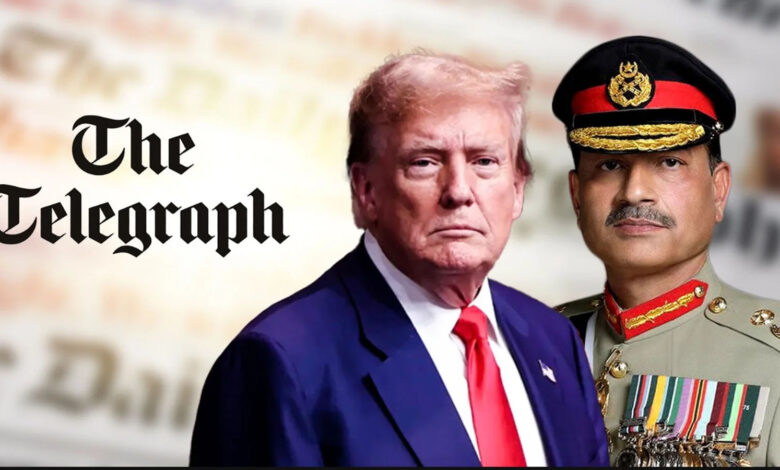
Islamabad (Daily Qudrat) – The British newspaper *The Telegraph* has published a detailed report highlighting how Pakistan has regained significant diplomatic influence in Washington, even earning unusual recognition at the White House despite tense relations during President Donald Trump’s first term.
According to the report, a pivotal moment in Pakistan-U.S. relations came in March when Pakistan aided the United States in capturing the main suspect behind the Kabul airport attack during the American withdrawal from Afghanistan, in which 13 U.S. soldiers were killed. Pakistani authorities not only apprehended the suspect but promptly handed him over to Washington. President Trump publicly acknowledged Pakistan’s cooperation during a joint session of Congress, thanking the government for its role in the operation.


This marked a sharp contrast to Trump’s first term when he accused Pakistan of providing safe havens to extremist groups despite receiving U.S. aid. This time, Pakistan’s carefully orchestrated diplomatic strategy improved its image in Washington. Behind the scenes, Islamabad aligned with the Trump administration’s counterterrorism priorities, resulting in a swift handover of the suspect Muhammad Sharifullah, aka Jafar, to the U.S. authorities within days.
Pakistan’s proactive stance was also evident amid heightened South Asian tensions in April, when India launched missile strikes following the killing of 26 tourists in Indian-administered Kashmir. Pakistan’s measured military response, along with its nomination of Trump for the Nobel Peace Prize, enhanced its strategic standing in Washington, while India rejected external mediation. Experts note that Pakistan’s engagement differed from many other nations, demonstrating a willingness to collaborate diplomatically.
Pakistan further strengthened its position through lobbying efforts in Washington, hiring influential firms, including Javelin Advisors, closely linked to Trump associates, while India also sought advisory services. The June visit of Pakistan Army Chief General Asim Munir, including a private lunch with Trump, symbolized the deepening ties, with Trump later praising General Munir as his “favorite field marshal.”
Economic and strategic factors also played a role. Pakistan highlighted its strong ties with the Gulf Cooperation Council, relations with Iran, strategic location in the Middle East, and recent defense agreements with Saudi Arabia. In September, a memorandum of understanding was signed allowing U.S. companies access to Pakistan’s mineral resources estimated at $6 billion.
Despite these achievements, concerns persist over Pakistan’s weak economy and past ties with extremist groups, which have historically worried Washington. Analysts caution that sustaining this influence will require Islamabad to continue delivering concrete results.
In summary, Pakistan’s diplomatic maneuvering, strategic cooperation, and economic incentives have earned it a prominent position in Washington under the Trump administration, though maintaining this status will demand ongoing efforts and tangible outcomes.