No Other Court Has Delivered as Many Landmark Judgments as Federal Constitutional Court: Chief Justice
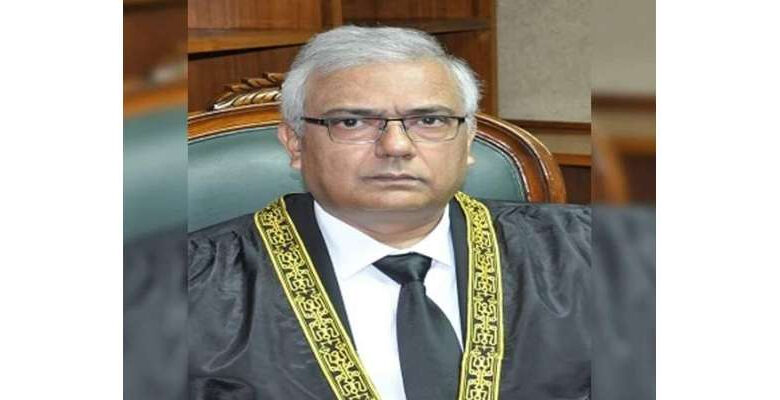
Islamabad: Chief Justice of the Federal Constitutional Court (FCC), Justice Aminuddin Khan, has said that the court disposed of 9,000 cases during its very first year, setting an unprecedented record in Pakistan’s judicial history.
According to reports, a ceremony was held to mark the completion of the Federal Constitutional Court’s first year. The event began with the screening of a special documentary highlighting the court’s journey, performance and major achievements during its first year.


On the occasion, Chief Justice Justice Aminuddin Khan unveiled a commemorative postage stamp issued to mark the court’s first anniversary. He also formally inaugurated the e-Court system as part of efforts to modernise judicial procedures. A cake-cutting ceremony was also held to celebrate the milestone.
Addressing the ceremony, the chief justice said the year had passed remarkably quickly and the Federal Constitutional Court had completed its first year of operations.
“Alhamdulillah, we have decided 9,000 cases during this year. No other court in Pakistan would have such a record of cases decided by it. No court has delivered such a large number of judgments in such a short period as the Federal Constitutional Court,” he said.
Speaking about judicial procedures and the delivery of justice, Justice Aminuddin Khan said that although the court had delivered decisions swiftly, every party had been given a full opportunity to present its position and arguments.
He said the time allocated to lawyers for presenting arguments was consistent with practices followed by courts around the world.
The chief justice observed that the bench and the bar had a shared responsibility to ensure the provision of speedy and affordable justice to litigants.
Addressing judicial officers and court staff, Justice Aminuddin Khan advised them never to become completely satisfied with their performance.
He said they should constantly strive to identify areas where their work could be improved and how their overall efficiency could be enhanced.
He added that performing duties during prescribed working hours was a basic responsibility, but taking an institution forward in a meaningful way required employees to go beyond routine obligations and work with dedication and commitment.


