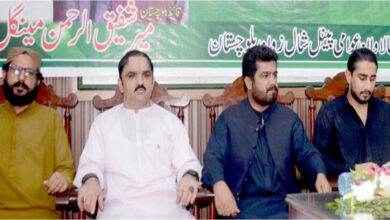
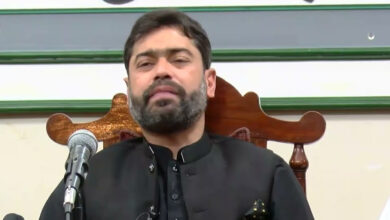
Quetta Jirga from Aug 30 to Sept 1 Crucial Amid Serious Political and Security Situation in Southern Pashtunkhwa: Achakzai, Jogezai

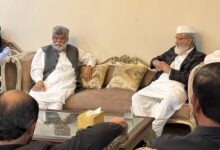
QUETTA: Pashtunkhwa Milli Awami Party (PkMAP) Chairman and Leader of the Opposition in the National Assembly Mahmood Khan Achakzai and the party’s Central Secretary Nawab Ayaz Khan Jogezai have said that the Quetta Jirga scheduled for August 30 to September 1, 2026, is of vital importance given the serious political, constitutional, economic and law-and-order situation in Southern Pashtunkhwa.
In a joint statement, the two leaders said the jirga, being organized by PkMAP, would deliberate on the fundamental issues confronting the people of Southern Pashtunkhwa, their constitutional and political rights, and the steps required for lasting peace and stability in the region.
They said terrorism, insecurity, kidnapping for ransom, theft, robbery and other crimes in Southern Pashtunkhwa and other Pashtun areas had severely affected the lives, property and business activities of the people.
They added that inter-provincial and international highways had become increasingly unsafe, while legal trade and movement along the Durand Line were also facing continuous restrictions. They said providing citizens with security, freedom of movement and a safe environment for economic activity was a fundamental responsibility of the state, and the prevailing situation was unacceptable.
Achakzai and Jogezai also criticized changes in policies concerning natural resources and amendments to mines and minerals laws. They alleged that large areas in mineral-rich regions were being allotted without taking into account the constitutional and legal rights or consent of local communities and tribes as genuine stakeholders.
They also alleged that transfers of millions of acres of land in forest reserve areas had been carried out without the consent of local communities and tribes. They demanded an immediate review of such measures, cancellation of illegal land transfers and protection of the constitutional, legal and collective rights of local populations.
The two leaders called for an immediate end to what they described as alleged forced extortion in coal-mining areas, threats faced by mine owners and workers, killings over resistance to extortion, and the burning of transport vehicles. They also demanded effective state protection for victims.
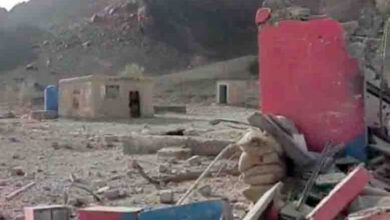
They called for transparent and impartial investigations into incidents in Ziarat, Mangla and Hanna Urak and other areas to determine the motives behind the loss of human lives and identify those responsible, with the perpetrators punished according to law.
The PkMAP leaders also criticized what they termed an unrepresentative parliamentary system established through “Form 47,” saying it had severely undermined the public mandate and democratic representation.
They alleged that subsequent constitutional amendments had weakened provincial autonomy, judicial independence, media freedom and Parliament’s effective constitutional role. They stressed that in a democratic state, sovereignty rests with the people and Parliament must be a genuine and empowered representative of the public mandate.
They said political instability, constitutional deviations and weak governance had further deepened the country’s economic crisis. The significant rise in debt, growing financial pressure and institutional instability over recent years, they added, required rebuilding the country on the principles of constitutional supremacy, parliamentary democracy, federalism and transparent governance.
The leaders further said failed internal and external policies had contributed to internal instability, deteriorating law and order and growing international isolation.
They opposed limiting the constitutional authority of civil administrations and elected institutions in districts, divisions and provinces and transferring administrative matters to unelected forces, describing such practices as contrary to the fundamental principles of the federal parliamentary system.
They said lasting peace could not be achieved through force alone and required adherence to the Constitution and law, political dialogue, effective civil administration and restoration of public trust.
Achakzai and Jogezai said the Southern Pashtunkhwa Jirga would undertake serious political and collective deliberations on these issues and present clear and practical recommendations for protecting public rights, ensuring constitutional supremacy and peace, safeguarding local ownership and participation in natural resources, promoting cross-border trade and strengthening the democratic and parliamentary system.