How Dangerous Is It to Send Your CNIC and Sensitive Documents via WhatsApp?
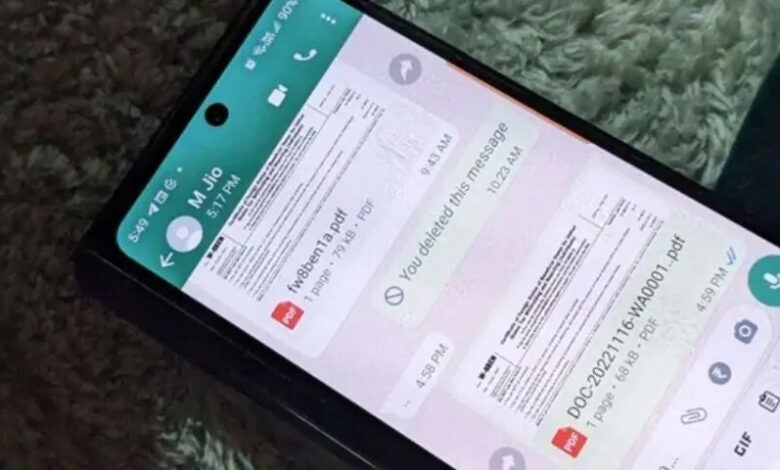
ISLAMABAD: Sending sensitive documents such as a national identity card, bank statement or other personal records through WhatsApp may expose individuals to significant privacy and financial risks, experts caution.
Loan agents, property dealers, hotel staff and representatives of financial or other service providers may ask customers to share their CNIC or other documents through WhatsApp for identity verification. While such requests may appear routine, sending documents without proper verification can result in personal and financial information being stored on another person’s phone, laptop or cloud backup.


Once a document has been sent, the sender loses control over where copies are stored and how long they remain accessible. In today’s digital environment, personal information has become a valuable asset, making secure collection, limited access and proper protection increasingly important.
Loss of Control Over Personal Data
The biggest risk of sharing important documents on WhatsApp is not necessarily that every recipient will misuse the information, but what happens to the documents after they are received.
Once a CNIC or bank statement is downloaded, it may be stored on a personal device and automatically backed up to a cloud account. Even if the recipient is trustworthy, the documents could remain there for years and potentially be exposed if the device or account is hacked or compromised.
Risk of Identity Theft and Financial Fraud
When sensitive documents are collected through personal phone numbers instead of an organisation’s secure system, the information moves outside formal cybersecurity infrastructure. Multiple copies of the same document may be created through downloads, forwarding and backups.
If such information falls into the wrong hands, it could be used for unwanted calls and messages and, in serious cases, identity theft or financial fraud.
Safer Ways to Verify Identity
Protecting sensitive information does not necessarily mean refusing to share documents altogether. Banks, hotels and other organisations may genuinely need identity verification. However, the safer approach is to use secure methods of collecting information.
Organisations should preferably use secure digital forms on their official websites or authorised verification systems instead of asking customers to send copies of sensitive documents through WhatsApp.
Personal Numbers vs Official Portals
Submitting information through an organisation’s secure portal provides a clearer record of who is collecting the data and why. In contrast, once a document is sent to a personal phone number, it becomes difficult to determine where it is stored or how many copies have been created.
Important Safety Measures for Users
Consumers should pause whenever someone asks them to send a CNIC, bank statement or other sensitive document through WhatsApp. They should request the organisation’s official website or secure document-upload portal and verify the request independently.
If sending a document through WhatsApp is absolutely unavoidable, users should consider protecting the file with a password and sharing the password separately.
A CNIC or bank statement is not an ordinary file. It contains information that forms part of a person’s financial and personal identity. Once such a document leaves the user’s device, regaining complete control over it can be extremely difficult.