Pakistan’s Freedom Is the Fruit of Great Sacrifices; Violence Leads to Backwardness: Sarfraz Bugti

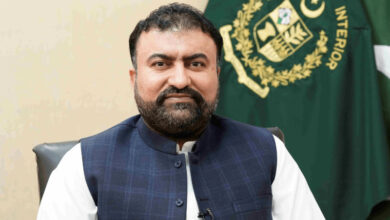
QUETTA: Balochistan Chief Minister Mir Sarfraz Bugti has said Pakistan’s independence was achieved through immense sacrifices and stressed that the path of guns and violence could only lead Balochistan towards further backwardness, deprivation and instability.
He was addressing a grand Independence Day ceremony held late Thursday night and into Friday to mark Pakistan’s 79th Independence Day. The event was attended by members of the Senate and National Assembly, ministers from Sindh and Gilgit-Baltistan, distinguished guests from other provinces and a large number of citizens.


At the outset, the chief minister paid tribute to the martyrs who sacrificed their lives for Pakistan and to personnel of the Pakistan Army, Frontier Corps Balochistan North and South, Balochistan Police and civil institutions who had lost their lives in the fight for peace. Prayers were also offered for the departed soul of Sanaullah Achakzai, the young son of Balochistan Assembly Speaker Captain (retd) Abdul Khaliq Achakzai.
Bugti said the sacrifices made for Pakistan’s security, stability and development were continuing even today. He said security forces, police and civilian personnel had rendered immense sacrifices for the restoration of peace in Balochistan, adding that the grief of the families of martyrs was shared by the entire nation.
Sending a clear message to anti-state elements, the chief minister said the government had repeatedly made it clear that the use of violence and weapons could not take Balochistan towards development. “This path has brought nothing to the province except backwardness, deprivation and instability,” he said.
Bugti said Rs515 billion had been spent in Gwadar alone over the past decade, but violence and unrest remained major obstacles to Balochistan’s development.
He said those who had chosen the path of armed violence had two options: accept the state of Pakistan and return to the national mainstream, as the doors of the state remained open to them. However, he stressed that no one would be allowed to target passengers, teachers, workers or innocent civilians.
The chief minister said the provincial government, in coordination with security forces, would work to establish lasting peace in Balochistan.
He said killing innocent civilians was not part of Baloch traditions. Forcing passengers off buses and killing them in front of women and children, he added, was neither consistent with Baloch values nor acceptable in a civilized society.
Bugti said those who carried out terrorism in the name of Islam had historically been identified as Khawarij, while those taking up arms against innocent people in the name of Baloch nationalism had no connection with Baloch identity or traditions.
He alleged that terrorist elements were misleading poor Baloch youth and taking them to the mountains while their own children lived comfortable lives abroad.
The chief minister said the Balochistan government was providing young people with opportunities in education, employment and development. He said doors to leading international universities, including Oxford and Harvard, had been opened for Balochistan’s girls, with more than 10,000 scholarships provided.
He said employment schemes had been launched for young people, while pink scooters and a green bus service had been introduced for female students. He added that 99 percent of previously closed schools had been reopened.
Bugti said the government was ensuring merit-based recruitment and using artificial intelligence to improve transparency in the hiring process.
“The state wants to move forward together with the youth of Balochistan,” he said, adding that grievances against the government should not be turned into punishment for the state or Pakistan. Differences, he said, should be resolved through dialogue, the Constitution and democratic processes—not through weapons.
Addressing the issue of violence against citizens from Punjab, Bugti said the killing of a Punjabi citizen in Balochistan should not be attributed to the Baloch people. He described the Baloch as a hospitable nation and said terrorism had no connection with any particular ethnicity or community.
“A terrorist has no nation,” he said, adding that associating terrorism with any particular ethnic group was an enemy conspiracy.
Bugti said the participation of thousands of people in the Independence Day ceremony was clear evidence of the love and affection of the people of Balochistan for Pakistan. Attempts to create ethnic and linguistic divisions, he said, were enemy tactics that the people of Balochistan would not allow to succeed.
“Our first identity is Pakistani; afterward, we are Baloch, Pashtun, Sindhi or Punjabi,” he said.
The chief minister said Pakistan was a strong country with well-organized and capable armed forces and was a nuclear power. He expressed confidence that no force in the world could harm Pakistan.
Concluding his address, Bugti said the Pakistani nation would remain united and play its role in the country’s development, security and stability, adding that Pakistan would remain strong and enduring.