NP Warns Against Distorting History, Calls for Baloch–Pashtun Unity
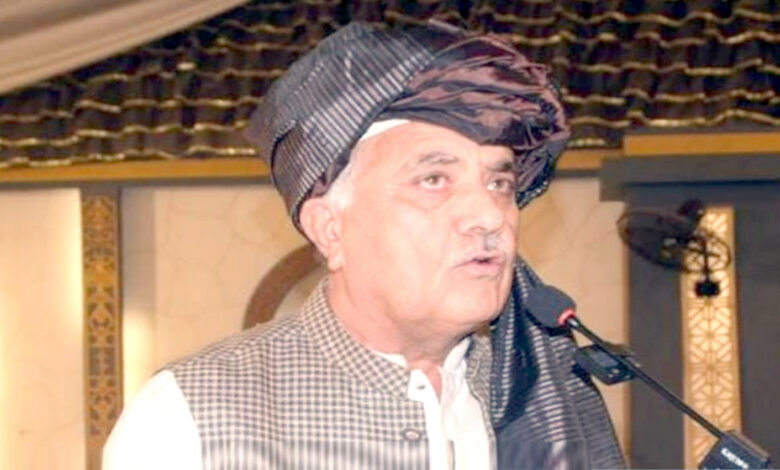
National Party’s Central Secretary General **Mir Kabir Ahmed Muhammadshahi** has said that Baloch and Pashtun are brotherly nations who have lived as neighbors on their respective lands for centuries and are fully aware of each other’s boundaries, ownership, and political authority.
In a statement, he said that even where differences exist, they can be resolved through traditions, mutual respect, and fair principles. He stressed that both oppressed nations are currently facing similar political, economic, and security challenges, which require cooperation and harmony to launch a joint struggle for national rights.


Mir Kabir regretted that at such a critical time, irresponsible statements by certain individuals—whether intentional or unintentional—are distorting history and facts by denying Baloch ownership and presence, which he said is harmful to efforts aimed at political unity and consensus between the two nations.
Referring to the historical and territorial connection of Baloch people with **Shal/Quetta**, he said that history and ground realities are clear and need no certification from anyone. He added that even a sincere study of the *Gazetteer of Balochistan 1907*, often cited by critics themselves, would remove many misunderstandings.
He said that historically Quetta contained properties of the Khan of Kalat, Shahwani, Kasi, Sadat, and other tribes. Since the 17th century, during the rule of Baloch ruler Mir Ahmad Khan (I), Shal remained under Baloch governance as part of Balochistan. The Khans of Kalat not only ruled Quetta but also granted lands to various tribes and personalities from their own ownership.
Mir Kabir further stated that at the time of the British arrival, Quetta was part of Balochistan, and the arrangements for direct British administration in 1879, followed by the lease agreement in 1883, were concluded with the Khan of Kalat.
Regarding population data, he said that according to the 1901 census recorded in the Gazetteer, Quetta was a multi-ethnic city where no single nation held a majority. Even when Baloch and Pashtun populations were combined, they were fewer than the non-local population, while the difference between Baloch and Pashtun population ratios was only five percent. He added that during the colonial period, most of the area of the British Balochistan Commissionerate also comprised Baloch regions.
Mir Kabir concluded by saying that Quetta remains a bouquet of diverse communities and a shared home for all. He warned that today both Baloch and Pashtun peoples face grave issues, including threats to life, property, and dignity, denial of democratic representation and the right to rule on their own land, exploitation of resources, and deprivation of basic rights. He urged political parties, leaders, and workers to avoid creating unnecessary disputes and instead promote unity and collective struggle to confront shared challenges and crises shoulder to shoulder.