Karachi Records 36 Earthquakes in Just 12 Days — No Casualties Reported, Experts Urge Calm
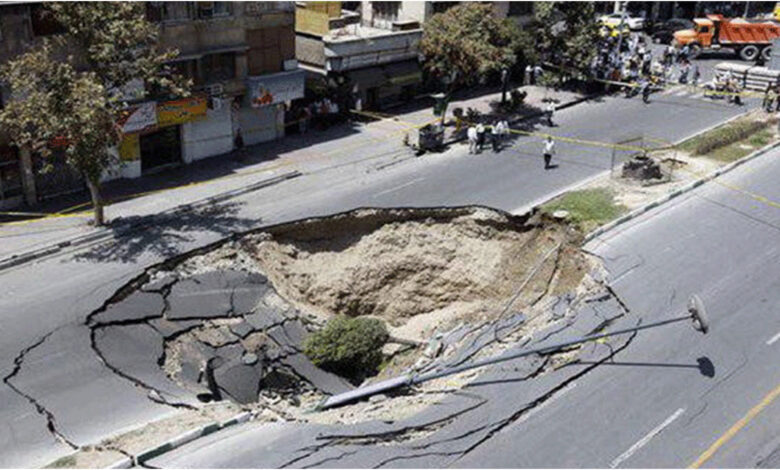
In an unprecedented development, **Karachi has experienced 36 minor earthquakes** within a span of just **12 days**, starting from **June 1**. The most recent tremors were felt in the **eastern parts of the city** late last night.
According to geological data, the quakes measured between **1.5 and 3.6 on the Richter scale** and were of **short duration**. Fortunately, **no loss of life or property** has been reported so far.


The tremors were felt across multiple areas including **Quaidabad, Gadap, Malir, DHA, and Korangi**. The frequent seismic activity has understandably caused **anxiety among residents**, with **videos and rumors** circulating on social media claiming that **sinkholes** and **ground subsidence** have begun to appear.
### What Could Be Causing Ground Shifts?
Experts have suggested several **natural geological explanations** for these reports:
* **Soil displacement and voids:** During an earthquake, **underground rock and soil layers** can shift, creating **empty pockets** that lead to **surface subsidence**.
* **Water table fluctuations:** Sudden movement or absorption of **underground water** can weaken the soil structure.
* **Liquefaction:** In areas with **sandy or moist soil**, the ground may **temporarily behave like a liquid**, which can cause buildings or land to sink.
* **Cavern collapse:** The presence of **limestone or salt layers** underground can lead to **natural cavities**, which may collapse during tremors.
* **Landslides or slope shifts:** Though not common in urban Karachi, sloped regions can experience **landslides or downward shifts** in response to seismic activity.
### Expert Reassurance
Speaking to *V News*, **Ameer Haider Laghari**, head of the **Tsunami Warning Center**, emphasized that **ground movement is a natural geological process** — much like how the Himalayas continue to rise.
> “If one part of the Earth’s crust sinks, another rises. This is not something new or alarming,” he explained.
He confirmed that **no dangerous ground deformation** has been observed following the recent quakes and noted that **monitoring instruments have been installed across various locations** in Karachi to track seismic activity scientifically.
Laghari reiterated that **Karachi lies on an active fault line**, which explains the frequency of tremors. However, such activity is **normal** and comparable to patterns observed in **Japan, Indonesia, India, and the United States**.
> “If 36 earthquakes have occurred with **zero structural damage**, then there’s **no immediate threat**. If the situation were dire, high-rise buildings would have already shown critical failure.”
He also criticized **unplanned construction** in many parts of Karachi, particularly in informal settlements, noting that **cracks or collapses** in unregulated structures should **not be confused** with signs of impending disaster.
### Conclusion
While the seismic activity in Karachi is **historically unusual**, there is **no scientific indication** of a major threat at this time. Authorities continue to monitor the situation closely, and experts are urging the public to **remain calm, avoid panic**, and rely on **verified information** from credible sources.