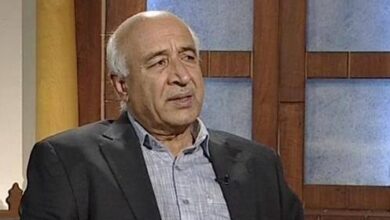
Artificial Terrorism Being Used as Pretext to Displace People Through Military Operations in Pashtun Areas: Khushal Kakar
MUSLIM BAGH: Pashtunkhwa National Awami Party (PNAP) Chairman and Member of the National Assembly Khushal Khan Kakar has expressed serious concern over the growing incidents of terrorism, unrest and insecurity in Pashtun areas, alleging that artificial terrorism is being used as a pretext to launch military operations and force residents to vacate their homes and localities.
He warned that if the Pashtun people failed to understand the gravity of the situation in time and demonstrate unity and solidarity, conditions could deteriorate further, forcing people to leave their homes and become internally displaced once again.
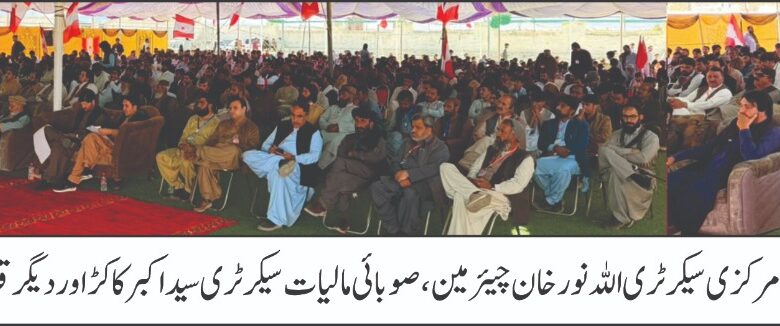
He expressed these views while addressing a regional conference of Muslim Bagh Shar, organised by Pashtunkhwa National Awami Party’s Qila Saifullah-II district chapter.
The conference was also addressed by the party’s provincial president Nasrullah Khan Zere, provincial senior vice-president and central secretary Allah Noor Khan Chairman, provincial finance secretary Saeed Akbar Khan, Habibullah Mehtarzi, Shams Rodwal, Shamsullah, Azeem Tareen and other party leaders.
Poet Abdul Khaliq Didar presented revolutionary poetry, while Malik Jumma Khan recited verses from the Holy Quran. Zaman Sahib performed the duties of the stage secretary.
Earlier, a closed-door session of the conference was held under the chairmanship of Qila Saifullah-II district secretary Habibullah Mehtarzi. The former regional secretary presented a detailed report on the party’s organisational performance over the past three years, which was reviewed and approved by the delegates.
To expand organisational activities and strengthen the party, Muslim Bagh Shar was subsequently divided into two separate regional units.
For Muslim Bagh Shar-I, Amanullah was elected regional secretary and Musa Khan senior deputy secretary. Ehsanullah, Kaleemullah, Naqeebullah, Saifullah, Naqeebullah Ahmed Khel, Noor Shah Ustad, Haji Allah Noor Imran Zai, Inamullah, Atta Afghan, Hikmatullah and Naeem Bakalzai were elected as deputy members. They took their oath from party chairman Khushal Khan Kakar.
Similarly, Jafar Khan was elected regional secretary and Younas Khan senior deputy secretary for Muslim Bagh Shar-II. Rahimullah Councillor, Izhar Khan Samakhel, Dilbar Khan, Liaquat Khan, Jamal Kharoti, Najeeb Samakhel, Malik Zainullah Akbar Sahib, Abdul Rahman and Rafiq Khan were elected as deputy members. They took their oath from provincial president Nasrullah Khan Zere.
A large number of party workers and delegates attended the conference.
Congratulating the former executive members of Muslim Bagh Shar on organising a successful conference, Khushal Kakar said their continuous struggle, courage, determination and organisational efforts had made it possible to divide the area into two separate regional units.
He said Muslim Bagh had always been a strong centre of the Pashtunkhwa National Awami Party and its people had played a leading role in the Pashtun national movement, particularly in the party’s political struggle. He expressed confidence that strengthening and organising the party with the same commitment would help achieve its national objectives.
The party chairman said the growing insecurity, terrorism, uncertainty and alleged occupation of people’s lands and properties in Pashtun areas were matters of grave concern. He specifically mentioned Mangla, Ziarat, Harnai, Zarghoon Ghar, Shaban, Qila Saifullah, Sherani, Qila Abdullah, Zhob and other areas, where he said incidents of terrorism and insecurity were increasing.
He warned that failure to collectively confront the situation could have serious consequences for the entire Pashtun region. He alleged that military operations could subsequently be launched in the name of restoring peace, turning cities and villages into ruins.
Referring to past military operations in the former Federally Administered Tribal Areas (FATA) and Swat, Kakar said millions of people had been displaced, while their homes and businesses were destroyed. He said many affected families were still living in difficult conditions in different cities, including Islamabad, Lahore and Karachi.
He claimed that more than 30 million Pashtuns were currently compelled to earn their livelihoods away from their homeland. He warned that failure to address the prevailing situation could further increase displacement, economic hardship and deprivation, pushing the Pashtun population towards greater subjugation.
Kakar said the natural resources and wealth of Pashtunkhwa were being turned into a source of hardship for its people. Despite the region being blessed with fertile land, minerals, water resources and other natural assets, local communities continued to face deprivation, poverty and exploitation instead of benefiting from these resources.
He alleged that southern Pashtunkhwa was being consistently neglected in every sector. Pashtun districts were being denied their due share in budget allocations, government jobs and development projects.
He said no adequate development schemes or scholarships had been allocated to Pashtun districts under the Rs17 billion Balochistan Rising development package. Similarly, Pashtun areas had allegedly been ignored in scholarship programmes related to coastal areas and Gwadar, as well as the National Highway Authority’s Rs112 billion projects.
He said Loralai University was the only university in southern Pashtunkhwa and was itself facing serious administrative and financial challenges.
He further alleged that Pashtuns were being deprived of their due representation in CPEC projects, 2,800 vacancies in the Quetta Electric Supply Company (QESCO), and various federal departments, including the Federal Board of Revenue, Pakistan Railways and the Communications Division.
He said the situation was unacceptable and called for a fair distribution of resources and equal rights for all nationalities.
Kakar said the Pashtunkhwa National Awami Party had never remained silent over injustices against the Baloch people or violations of their national rights. He said the party had consistently supported the Baloch national movement and their legitimate democratic and national demands.
He maintained that the party’s political philosophy was based on equality, autonomy, national unity and mutual respect among all oppressed nations.
Highlighting the economic difficulties facing Pashtun areas, he said major trade routes, including Badini, Chaman and Qamaruddin, remained closed, severely affecting traders, transporters, labourers and ordinary citizens. He questioned the closure of these routes while trade routes with Iran were being opened.
He said agriculture was on the verge of collapse, while no effective planning had been undertaken for agricultural development, irrigation or water storage.
Kakar said there was considerable potential for constructing dams in Margha Kabezai, Beroj Aziz Khan and other areas. He said such projects could also pave the way for establishing factories and economic zones, creating employment opportunities for local people.
However, he regretted that the authorities had failed to take serious steps to utilise these opportunities. He added that the closure of trade routes and the destruction of transport-related economic activities had left thousands of vehicles idle and affected the livelihoods of thousands of families.
Addressing the issue of Pashtun national unity, Kakar said the party’s position was clear. He alleged that the separation of Attock and Mianwali from Pashtunkhwa had already disregarded historical, geographical and national realities, and that similar concerns had now emerged over the Ghazi-Barotha issue.
He categorically rejected the proposed creation of Hazara province, arguing that it could undermine Pashtun national unity and their rights over resources.
He claimed that Pashtuns and Pashto-speaking people constituted the majority in five of the seven districts of Hazara Division, while Hindko was also an important national language of Pashtunkhwa.
He further alleged that the proposed division was linked to questions of authority and control over electricity generation and revenues from the Tarbela, Dasu and Diamer-Bhasha dams on the Indus River. He said efforts were being made to transfer the benefits of electricity and resources generated through these projects to Punjab, adding that the proposed transfer of approximately 60 billion units of electricity also required consideration in this context.
Clarifying the party’s position, Kakar said the Pashtunkhwa National Awami Party was not opposed to the rights of any national community. Rather, it demanded respect for the rights, resources and authority of all nationalities.
He said the party’s fundamental demand was to unite all Pashtun areas into an autonomous Pashtun federating unit to safeguard their national identity, unity, resources and political and economic rights.
He also expressed concern over rising unemployment and economic deprivation, alleging that government jobs were being distributed unfairly and fertile lands were being taken away in the name of various development projects.
He stressed that local communities had the first right over their natural resources and that their interests, employment and future must be given priority in all development initiatives.
The PNAP chairman said no political party could achieve its objectives without practical public support, confidence and participation. He urged people to recognise their national responsibilities and become part of an organised political struggle.
Calling upon the public to participate in the province-wide complete shutter-down strike and peaceful demonstrations announced by the All Parties, scheduled for Thursday, November 19, he urged traders, workers, students and people from all walks of life to make the protest successful.
He said the Pashtunkhwa National Awami Party was playing a leading role in the joint struggle and that all political parties and segments of society must demonstrate unity and solidarity to effectively raise demands for people’s legitimate rights, peace, employment opportunities, control over resources and national unity.