Iran Official Criticises US Military Spending, Says Infrastructure Investment Could Have Prevented Nationwide Aviation Crisis
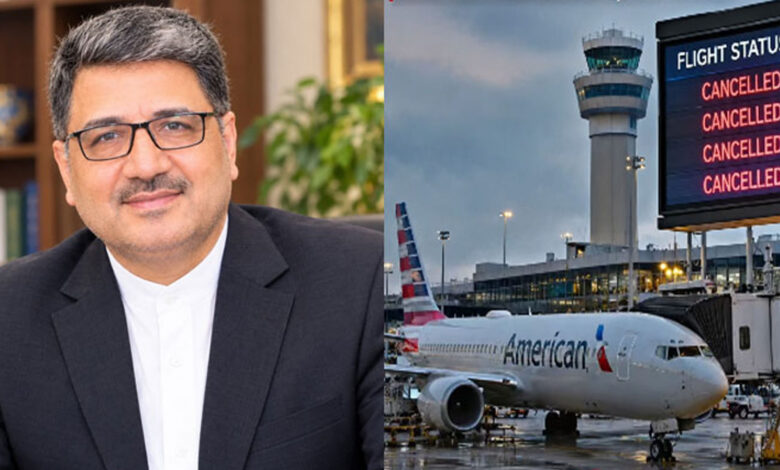
ISLAMABAD:Senior Iranian Foreign Ministry official Hassan Nourian has criticised US military spending, saying that if Washington had invested its resources in domestic infrastructure instead of wars, it might not have faced a crisis that grounded aircraft across the country for four and a half hours.
US officials have reportedly estimated that modernising the country’s aviation industry would require $50 billion, while claims suggest that the US war against Iran has cost approximately $47 billion.


In an interview with Geo News, Nourian advised the Trump administration to spend billions of dollars in taxpayers’ money and public resources on modernising and strengthening America’s basic infrastructure rather than purchasing military equipment, financing wars or providing military assistance to occupying forces involved in the killing of innocent people.
He said economic resources belonged to the American people and should be used to improve their lives, modernise essential public services and strengthen critical systems, including aviation, transportation, communications and air traffic control.
Nourian stressed that the priority should be improving the well-being of American citizens and protecting their interests rather than financing conflicts and military operations abroad.
He said that if the United States had focused on developing its domestic infrastructure and investing resources in improving it, the nationwide ground stop crisis that occurred on Friday might have been avoided.
Asked why Iran had not experienced similar air traffic control disruptions during or after the war, the Iranian official said his country was among the leading nations in technical and engineering services.
He claimed that Iran had an exceptionally high number of engineering graduates relative to its population, comparing its output with countries such as Russia, China and the United States.
Nourian said Iran’s strategy had focused on developing domestic industries and strengthening indigenous technological capabilities. He added that this approach had enabled the country to make significant progress in several scientific and industrial fields.
He specifically mentioned nanotechnology, biotechnology, cognitive sciences, advanced manufacturing, mining and several other industrial sectors.
Discussing the aviation industry, Nourian said Iranian scientists and specialists had also developed considerable expertise in aircraft maintenance and repair.
He said that despite strict international sanctions and difficulties in accessing spare parts and technical services, Iran continued to maintain older aircraft while expanding its efforts towards self-reliance.
According to Nourian, Iran had demonstrated that a country could stand on its own feet even under extremely difficult circumstances through education, scientific research, indigenous technological development and investment in the capabilities of its younger generation.
Commenting on the aviation crisis in the United States, he said Washington was widely regarded as a global leader in aircraft manufacturing, radar technology and extensive airline networks, yet the country had been forced to ground its aircraft during the disruption.
He said the situation should be compared with the 47 years of sanctions imposed on Iran by the United States, both unilaterally and through international organisations, which he claimed were aimed at preventing the development of Iran’s aviation industry.
Nourian also referred to a recent announcement by US Treasury Secretary Scott Bessent regarding sanctions on 47 Iranian airlines.
He said the United States had also restricted Iran’s access to aircraft and aviation spare parts for the past 47 years.
Despite these restrictions, challenges and the ageing aircraft fleet, Nourian claimed that Iran’s domestic aviation industry continued to operate and its air traffic management system had not experienced a similar nationwide crisis.
The Iranian official further alleged that US sanctions against Iran’s aviation sector were intended not only to weaken the industry but also to restrict the arrival of foreign passengers and tourists and make international travel more difficult for Iranian citizens.
He said the restrictions had created difficulties for patients seeking medical treatment abroad, as well as tourists, scientists, researchers, businesspeople and religious travellers.
Nourian argued that Washington was effectively seeking to limit the Iranian people’s connections with the outside world and restrict their freedom of movement.
However, he maintained that despite decades of sanctions and restrictions, Iran had managed to keep its aviation industry operational and continue pursuing further development.
Attribute disputed claims more consistentlyCondense repeated infrastructure arguments


