Senate Also Approves Emergency in Khyber Pakhtunkhwa After National Assembly Endorsement
ISLAMABAD: The Senate on Wednesday approved the presidential declaration of an emergency in Khyber Pakhtunkhwa, following its endorsement by the National Assembly, amid heated protests by opposition lawmakers and sharp exchanges between government and opposition leaders.
The resolution’s passage triggered uproar in the upper house. Opposition Leader Allama Raja Nasir Abbas reportedly tore up a copy of the resolution in front of the dais, while government and opposition members exchanged heated words and scuffles broke out. Pakistan Tehreek-e-Insaf (PTI) lawmakers subsequently walked out of the session.
Earlier, the National Assembly had passed a resolution by a majority vote endorsing the emergency declaration. Opposition members opposed the move, arguing that it undermined democracy and the province’s constitutional authority.
Government Cites Security Threats
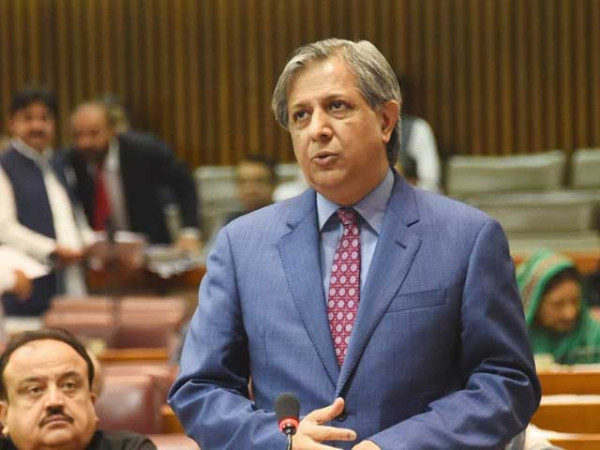
Speaking during the National Assembly debate, Federal Law Minister Azam Nazeer Tarar said the Constitution required parliamentary approval of a presidential emergency declaration within 10 days. He maintained that the government had taken the decision after extensive deliberations over what he described as growing threats to national security.
“Internal unrest, cross-border infiltration and the actions of the provincial government were increasingly becoming a threat to national security,” Tarar said.
He cited a rise in militant violence in Khyber Pakhtunkhwa, claiming that 3,787 terrorism-related incidents had been recorded in 2026. He also referred to more than 3,700 incidents during the year, attributing the deteriorating security situation to developments over several years.
Tarar said Pakistan’s security forces and police had made significant sacrifices to restore peace, but the situation had subsequently deteriorated. He also criticised the provincial government’s handling of security matters and alleged that political considerations had taken precedence over counterterrorism efforts.
The law minister rejected comparisons between the emergency and the military takeover of October 12, 1999, arguing that the current step had been taken under constitutional provisions and after attempts to reach a political settlement.
Tarar Details Failed Negotiations
Tarar said the federal government had initially prioritised negotiations rather than confrontation. He referred to talks between government and opposition representatives in the Speaker’s Chamber, which continued over two days and involved repeated efforts to prepare an agreed draft.
According to Tarar, the discussions focused on a coordinated strategy against terrorism, but the opposition raised demands concerning facilities for PTI founder Imran Khan in prison.
He said prison-related matters were governed by jail rules and judicial authority, while the government could not independently grant all the requested concessions.
Tarar also recalled earlier negotiations over holding simultaneous elections across the country, claiming that an understanding had been reached to pass the budget before proceeding to elections. However, he alleged that the talks collapsed after PTI’s leadership decided not to continue.
During the debate, opposition lawmaker Shafqat Awan interrupted Tarar’s speech. A heated exchange followed, with Awan accusing the government of entering parliament through what he described as “Form 47,” a reference to disputed election results.
Achakzai Calls for Political Settlement
Opposition Leader in the National Assembly Mahmood Khan Achakzai criticised the government’s security policies and questioned its legitimacy.
He described Pakistan as a voluntary federation and argued that successive military governments had contributed to the conditions that allowed militancy to flourish. He also accused the authorities of exploiting resources in Waziristan and using force against local residents.
Achakzai said he was prepared to sit with the prime minister in parliament to discuss the crisis, despite describing the current government as unconstitutional and illegal.
He further raised concerns about killings of social figures in the former Federally Administered Tribal Areas (FATA) and criticised the failure to consult parliament on major national and international issues. He also defended the opposition’s demand for access to Imran Khan, describing restrictions on meetings with him as unacceptable.
Bilawal Supports Emergency but Urges Fresh Talks
Pakistan Peoples Party (PPP) Chairman Bilawal Bhutto Zardari said the opposition had the right to oppose the emergency, but maintained that the provincial government had failed to control the situation.
He said President Asif Ali Zardari had attempted to avoid the emergency declaration by encouraging negotiations before exercising the constitutional power. According to Bilawal, the federal government made efforts to find an alternative, including discussing the designation of terrorism-affected areas.
Bilawal said he intended to support the federal government’s decision, while stressing that the emergency should not become a permanent arrangement.
“The emergency has been imposed out of necessity, not forever,” he said, urging both sides to set aside political differences and work together against terrorism.
He held Chief Minister Sohail Afridi responsible for the situation in the province and questioned why the provincial government had not offered a workable alternative to the emergency declaration.
At the same time, Bilawal urged the government to extend its hand for another round of negotiations and called on the opposition to return to the dialogue table. He said the fight against terrorism required a united national response and that political parties must play their part.
He also referred to regional security developments, alleging that India continued to sponsor terrorism in Pakistan, and said the country needed unity to address internal and external threats.
Barrister Gohar Rejects Government’s Position
PTI Chairman Barrister Gohar Ali Khan strongly criticised the emergency declaration, accusing the federal government of undermining democracy and paralysing the provincial government.
He said the government was using terrorism as a pretext to weaken PTI and claimed that fear of Imran Khan’s popularity was driving its actions.
Gohar argued that Pakistan would be stronger if its provinces enjoyed greater autonomy. He said PTI had called for an effective counterterrorism policy and opposed distinctions between so-called “good” and “bad” Taliban.
He also criticised restrictions on Imran Khan in prison, claiming that the PTI founder had been denied basic facilities, including toothpaste and warm clothing. Gohar said the party had sought political dialogue and wanted the issue of terrorism addressed through the appropriate forums, including the provincial government and relevant security committees.
Referring to earlier negotiations, he alleged that the government had threatened to take action against PTI if it proceeded with a long march, adding that the authorities had subsequently taken measures affecting the entire country.
Khawaja Asif Recalls Debate Over Return of Militants
Defence Minister Khawaja Asif said the government’s concerns had to be viewed in the context of past decisions concerning militant groups.
He recalled that former intelligence chief Lieutenant General (retd) Faiz Hameed and former army chief General (retd) Qamar Javed Bajwa had participated in discussions in which lawmakers were allegedly urged to support the return of militants to Pakistan.
Asif said political leaders should acknowledge past decisions and the contradictions between their statements and actions. He also criticised the opposition for focusing on Imran Khan’s prison conditions while, in his view, failing to give sufficient attention to terrorism.
The defence minister said the country faced a war that required a united response. He alleged that the provincial leadership had prioritised political concerns over security and claimed that the situation had left the federal government with few alternatives beyond imposing an emergency.
Asif also accused the provincial leadership of taking direction from an individual based in Afghanistan, a claim that was not independently established in the parliamentary proceedings.
Ahsan Iqbal Says Government Tried to Avoid Emergency
Federal Minister for Planning Ahsan Iqbal said the government had made repeated efforts to prevent the situation from reaching the point of an emergency declaration.
He contrasted the move with the October 12, 1999, military takeover, arguing that the current action had been taken under constitutional provisions and only after attempts at dialogue had failed.
Iqbal said residents of Khyber Pakhtunkhwa had suffered greatly from terrorism and that families had grown exhausted from repeatedly burying their loved ones. He criticised previous efforts to bring militants back into the country, saying assurances that they would respect the Constitution and abandon weapons had not been fulfilled.
He also referred to his own imprisonment during Imran Khan’s tenure, claiming that he had been denied physiotherapy and continued to suffer from an injury to his arm.
The National Assembly session was subsequently adjourned until 11 a.m. on Friday.
The approval of the emergency declaration by both houses of parliament marks a significant escalation in the political confrontation between the federal government and PTI, with renewed calls for dialogue competing with deep disagreements over security policy, provincial authority and the future of Khyber Pakhtunkhwa’s government.