Lasbela’s Historical Status Cannot Be Determined by Current Administrative Boundaries: Jam Kamal Khan

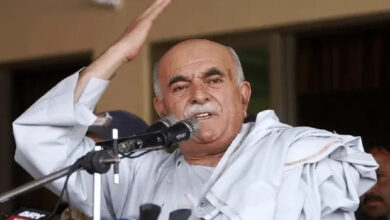
LASBELA – Federal Minister for Commerce and former Chief Minister of Balochistan, Jam Kamal Khan, has declared that the historical status of Lasbela cannot be determined by current administrative boundaries or the modern political map. He emphasized that the region’s distinct historical, political, and administrative identity must be assessed through authentic historical records and documented evidence rather than contemporary provincial demarcations .
In a detailed statement on social media platform X, Jam Kamal Khan said Lasbela is “not merely an ordinary district of Kalat” but emerged as a separate ruling entity in the 18th century and remained under the Jam dynasty’s rule until its administrative integration into Pakistan after independence .

Balochistan’s Diverse Historical Composition
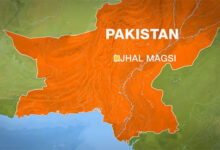
The Minister pointed out that present-day Balochistan did not exist as a single political entity in its current constitutional form throughout history . The region comprised several separate political and administrative units, including the Khanate of Kalat, the princely states of Lasbela, Makran, and Kharan, as well as territories directly administered by the British under British Balochistan .
He asserted that it is “historically inaccurate” to project today’s provincial map onto past political and administrative realities . Different areas of the region had their own distinct historical and political statuses, with administrative structures, political relationships, and governance systems changing over time .
Lasbela: A Princely State, Not an Ordinary District
Referring specifically to Lasbela’s relationship with Kalat, Jam Kamal clarified that while political and territorial arrangements between the Jam of Lasbela and the Khan of Kalat shifted over different periods, Lasbela functioned as a “separate princely state” rather than a subsidiary district of Kalat .
He noted that during the British era, Kalat, Lasbela, Makran, and Kharan were treated as separate princely states under British protection, while other parts of the region were governed directly by the British. British authority expanded gradually through treaties, leases, agreements, and administrative arrangements rather than through a single territorial takeover .
Post-Independence Administrative Evolution
Jam Kamal detailed that Lasbela acceded to Pakistan while retaining its separate identity for a period. From 1952 to 1955, it formed part of the Baluchistan States Union alongside other former princely states . Following the introduction of the One Unit scheme in 1955, Lasbela became part of Kalat Division. However, in December 1960, it was detached from Kalat Division and combined with Karachi to form the Karachi-Bela Division — an administrative link that formally existed at the divisional level during the 1960s . Lasbela was transferred back to Kalat Division in 1972 .
Ormara’s Contested History
The Minister also discussed the historically complex status of Ormara, noting that historical records reflect competing claims and changing political and revenue arrangements concerning its association with Kalat, Makran, and Lasbela . Modern accounts document Ormara’s early historical association with Lasbela before subsequent administrative changes placed it within the Makran structure .
Call for Objective Historical Debate
Jam Kamal stressed that historical debates “must reflect documented facts and the true historical significance of the region instead of projecting contemporary boundaries backwards onto earlier periods” . He said the modern Province of Balochistan emerged through the integration of historically different territories and administrative systems, particularly following the dissolution of One Unit and the restoration of provincial structures in 1970 .