Supreme Court Rules Tribal Customs Cannot Override Women’s Inheritance Rights
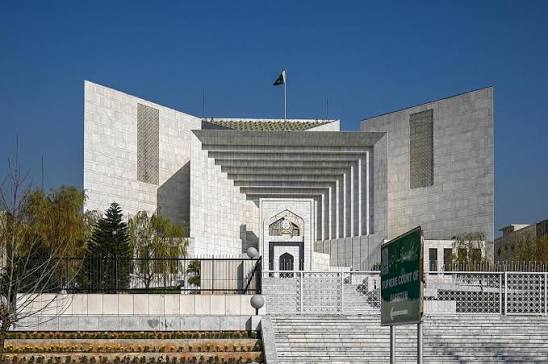
Islamabad: The Supreme Court of Pakistan has issued a landmark ruling affirming that tribal customs and jirga decisions cannot override Islamic law or the country’s legal framework, declaring that denying women their inheritance rights is unlawful.
In its judgment in a dispute over the inherited land of Mithi Khan, the apex court rejected an alleged attempt to seize inherited property through fraudulent land transfers and upheld the rights of the lawful heirs.


The court stated that property acquired through fraud confers no legal rights and emphasized that customs or tribal traditions used to deprive women of inheritance are illegal. It further ruled that no jirga or customary practice can extinguish the inheritance rights guaranteed under the Quran, Sunnah, and Pakistani law.
The judgment reaffirmed that denying daughters their lawful share of inheritance violates both Islamic Shariah and the law.
The Supreme Court upheld the earlier decision of the Balochistan High Court in favor of the legitimate heirs and declared the disputed land transfers to have no legal validity.
The court also observed that entries in revenue records are not conclusive proof of ownership and that any legal claim based on fraudulent transfers collapses once the fraud is established. It directed that the inherited property be distributed strictly in accordance with Islamic inheritance law.
The verdict, authored by Justice Irfan Saadat Khan, stressed that there can be no compromise on women’s inheritance rights and declared that any tribal custom contrary to Islamic Shariah is void, reaffirming that no jirga or tradition stands above the law or Islamic principles.