Article 6 Should Apply to Those Opposing Creation of New Provinces, Says Muhammad Ali Durrani
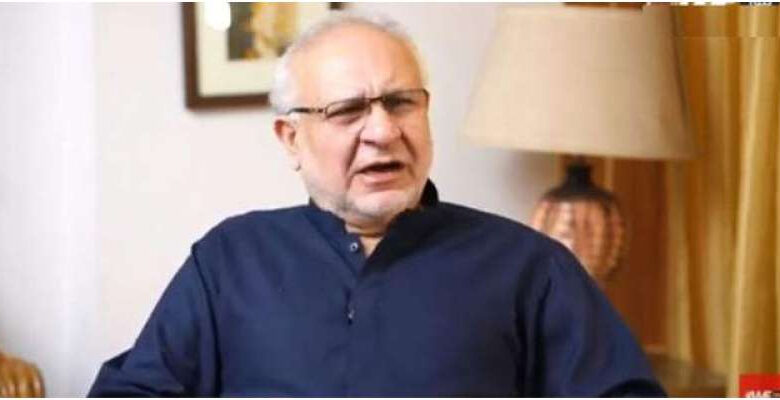
LAHORE: Former federal minister for information and broadcasting Muhammad Ali Durrani has said that Article 6 of the Constitution should be invoked against those opposing the creation of new administrative units and provinces under the constitutional provisions.
He said that if governments refused to provide a constitutional path for the creation of new provinces, the matter should be decided by the people through fresh general elections.


Speaking in an interview, Durrani called for the establishment of new provinces, including Bahawalpur, South Punjab and Hazara, arguing that their constitutional and political foundations already existed. He alleged that political parties opposing the move wanted to maintain their monopoly over power.
He stressed the need to understand the fundamental difference between administrative units and provinces, explaining that divisions, districts and tehsils had existed since the British era and had continued to increase. He cited the creation of around 18 new districts and five to six divisions in Punjab as examples of administrative expansion.
According to Durrani, a province is a constitutional unit with its own legislative authority, separate administrative structure and powers and responsibilities defined by the Constitution.
He said he had highlighted India’s expansion from eight to 28 states, as well as the benefits of smaller provinces and local governments around the world. These arguments, he added, had contributed to the Punjab Assembly unanimously passing resolutions in 2012 for the creation of Bahawalpur and South Punjab provinces, while similar demands had emerged in Hazara.
Durrani said two major developments had taken place in recent years: growing public awareness and merit-based recruitment and promotions in institutions such as the armed forces and civil services. He said these institutions offered opportunities for people from middle- and lower-middle-class backgrounds, where even the son of a soldier or subedar could rise to become Chief of Army Staff.
He claimed that he had personally met leaders of various political parties, including the PML-N, PPP and JUI-F, as well as Nawaz Sharif, and that they had expressed support for the principle of creating new provinces. However, he alleged that the process was subsequently blocked to prolong their hold on power and preserve their political dominance.
He said ruling parties were now concerned because the creation of smaller provinces and effective local governments could enable ordinary citizens and young people from less privileged backgrounds to emerge as political leaders, potentially ending dynastic politics.
Durrani alleged that political manoeuvring was taking place in Lahore and Karachi to obstruct the creation of new provinces, with administrative and political resources being used to block the process.
He also criticised what he described as a lack of political leadership, pointing to situations in which family members holding senior political positions appeared to take opposing positions, ministers clashed despite belonging to the same ruling party, and the president and prime minister remained silent.
The former minister claimed that all legal and constitutional groundwork for the creation of three new provinces had been completed. He said the PML-N itself had submitted legislative proceedings in 2019 for the establishment of Bahawalpur and South Punjab provinces, arguing that Parliament could move forward with legislation and announce the new provinces.
Durrani said that if the incumbent governments failed to create the provinces through constitutional means, he would support Bilawal Bhutto Zardari’s proposal for dissolving the assemblies and holding fresh elections.
He predicted that the next elections would be transparent and would not rely on Form 47, adding that they would effectively serve as a referendum between supporters and opponents of new provinces.
Commenting on PTI founder Imran Khan, Durrani said he did not believe in secret deals and was pursuing his case through the courts. He added that despite limited political training among the party leadership outside the country, its leaders were handling matters more effectively in his absence.