Makkah Defense Pact Is a NATO-Like Alliance, Says Turkish Foreign Minister
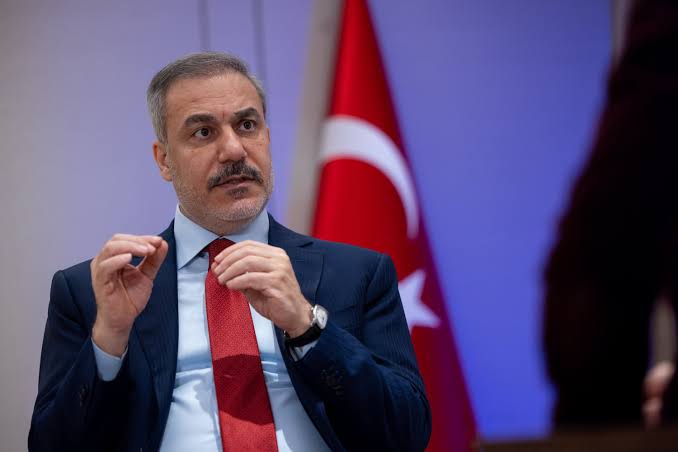
ANKARA: Turkish Foreign Minister Hakan Fidan has described the Makkah Joint Defense Pact between Saudi Arabia, Pakistan and Türkiye as a NATO-like alliance aimed at strengthening regional stability amid ongoing conflicts and rising tensions in the Middle East.
Fidan said Iran was not the target of the defense agreement and that no country would face a threat from the alliance unless it attacked one of its members. He stressed that strengthening defense and security cooperation among regional countries could play an important role in achieving lasting peace and stability.


According to the Turkish state-run news agency, Fidan said in an interview that he believed Egypt would join the alliance at the next stage. He noted that the three countries were already cooperating with Egypt in several areas as if it were a formal member of the alliance.
Fidan described Egypt as one of the region’s key countries and a natural partner on regional issues. He said some technical matters needed to be resolved regarding Egypt’s participation, but there would be no obstacle to its joining the agreement once those issues were addressed.
The Turkish foreign minister emphasized that the Makkah Joint Defense Pact was not directed against any particular country and did not identify any common enemy or threat. He said the alliance should not remain limited to the three founding countries and that other regional states could be included if necessary.
According to Fidan, in line with Turkish President Recep Tayyip Erdoğan’s vision, the security cooperation should be expanded, and if required, all regional countries could eventually be brought under the alliance’s umbrella.
Saudi Arabia, Pakistan and Türkiye recently signed the joint defense agreement in Makkah. Under the pact, an attack on one member country will be considered an attack on all three, with the primary objective of strengthening collective defense capabilities and deterrence.
The agreement comes amid continuing conflict and heightened tensions in the Middle East, which have also affected maritime traffic in strategic waterways, including the Strait of Hormuz and the Red Sea.