383 Miners Killed in Five Years as Balochistan Mine Safety Comes Under Scrutiny
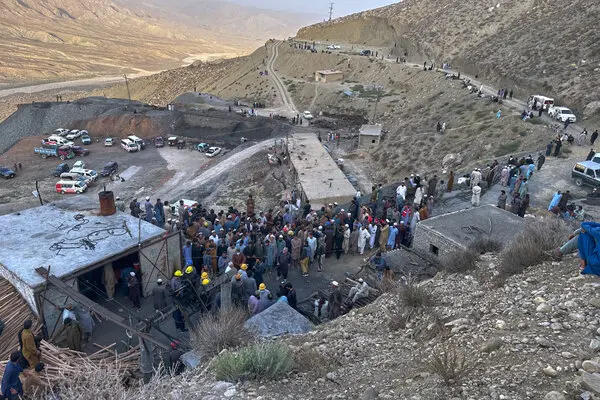
Quetta: A report by the Balochistan Mines and Minerals Department has raised serious concerns over mine safety, enforcement of mining regulations, and official oversight after revealing that 383 miners lost their lives in accidents at coal, chromite, and other mineral mines across the province between 2021 and 2025.
According to the report, the death toll indicates that, on average, a miner was killed every few days over the past five years, while many others suffered permanent disabilities in mining-related accidents.


The findings have renewed questions over accountability, with attention focused on whether responsibility lies with mine owners, contractors, the Mines Inspectorate, the Mines and Minerals Department, or the Government of Balochistan.
Experts noted that under the Balochistan Mines Act, mining rules, and mine safety regulations, operators are required to ensure proper ventilation, gas monitoring systems, protective equipment, emergency exits, trained personnel, rescue arrangements, and regular inspections before mining operations begin. They argue that strict implementation of these requirements could prevent many fatal accidents.
Legal experts said responsibility in the event of a mining accident extends to multiple stakeholders. Mine owners are responsible for maintaining safe working conditions and providing essential safety equipment, while contractors must ensure that only trained workers enter mines and that safety protocols are followed. The Mines Inspectorate is tasked with conducting regular inspections, sealing unsafe mines, and taking legal action against violations. The provincial government and the Mines and Minerals Department are responsible for strengthening oversight, legislation, rescue services, labor inspections, and safety enforcement.
Speaking to UNA, labor organizations and mine workers’ unions alleged that many mines in Balochistan continue to operate without basic protective equipment, including helmets, oxygen supplies, gas detectors, and emergency rescue facilities. They claimed that although major accidents often lead to the formation of inquiry committees, the findings are rarely made public and accountability is seldom enforced.
Labor leaders also alleged that even when criminal cases are registered against mine owners or contractors, many investigations lose momentum over time, allowing negligence to continue.
Legal experts said that if negligence or violations of mine safety laws are established, mine owners, supervisors, or responsible officials can face criminal prosecution, fines, suspension or cancellation of mining licenses, and other legal penalties. However, they noted that such measures have been implemented only rarely in practice.
The report has also prompted questions about how many mine owners, contractors, or government officials have faced legal action following the deaths of 383 miners between 2021 and 2025, how many mining licenses have been suspended or revoked, and how many convictions have resulted. According to the report, no comprehensive public record detailing post-accident investigations, legal proceedings, penalties, or administrative accountability has yet been released.
Labor unions, human rights organizations, and civil society groups have called on the Government of Balochistan to make all inquiry reports public and disclose the actions taken against those found responsible. They also urged stricter enforcement of mine safety regulations to prevent future tragedies.
Experts warned that unless mining laws are implemented without exception, inspections are strengthened, modern safety systems are introduced, and negligence is met with meaningful accountability, Balochistan’s mines will continue to pose deadly risks to workers instead of providing safe employment.