Balochistan Proposes Redirecting Remaining Flood Recovery Funds to Community Infrastructure Projects

Quetta/Islamabad: The Government of Balochistan has proposed that the remaining resources allocated for flood-affected districts in the province be utilized for community infrastructure projects instead of individual housing units, with the aim of benefiting a larger segment of the population and ensuring sustainable rehabilitation of flood-damaged areas.
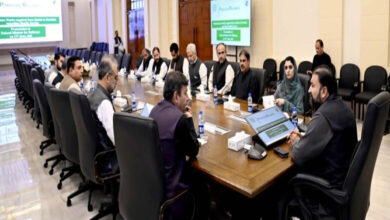
The proposal was presented during the 11th meeting of the IFRAP Standing Committee held in Islamabad on Monday. The meeting was chaired by Federal Minister for Planning, Development and Special Initiatives Ahsan Iqbal, while Balochistan Chief Minister Mir Sarfraz Bugti participated via video link along with members of his team.


The committee received a detailed briefing on progress made under the housing reconstruction and rehabilitation program in flood-affected areas of Balochistan. During the meeting, provincial authorities argued that the remaining available funds should not be restricted solely to individual housing construction but should instead be directed toward broader community infrastructure initiatives.
According to the proposal, the funds could be used for projects including roads, drinking water schemes, drainage systems, educational institutions, healthcare facilities, and other public welfare infrastructure aimed at providing direct benefits to a larger number of flood-affected residents.
The committee held detailed discussions on the proposal, and the Planning Commission expressed its preliminary agreement with the concept. It was decided that the recommendation would be presented to the relevant donor agency for consideration to ensure that available resources are utilized in the most effective and public-oriented manner.
The meeting also reviewed the financial and physical progress of the IFRAP project, discussing implementation status, existing challenges, and future strategies for the program.
Participants emphasized the need to accelerate rehabilitation efforts in flood-hit regions and ensure that available resources are utilized in a way that maximizes public benefit and strengthens long-term community resilience.