Saudi Embassy in Islamabad starts same day visa processing for Pakistanis

ISLAMABAD: Saudi Arabia’s newly appointed Ambassador to Pakistan, Rajeh bin Thamer Al-Baqami, has announced that the Saudi Embassy in Islamabad has started same-day processing of visa applications for Pakistani citizens.
The initiative aims to facilitate travel to Saudi Arabia for Pakistanis and strengthen business, cultural and people-to-people ties between the two countries.
The announcement was made during a meeting between the Saudi ambassador and Federal Minister for Petroleum Ali Pervaiz Malik, where the two sides discussed opportunities to enhance cooperation in various sectors, particularly minerals, petroleum and energy.

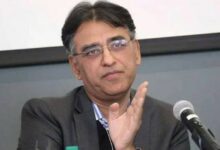
Ali Pervaiz Malik appreciated the longstanding and strong relations between Pakistan and Saudi Arabia, saying Islamabad attaches great importance to its historic ties with Riyadh and seeks to expand cooperation in key sectors.
The minister said that during his recent visit to Riyadh, he had also conveyed a message of Pakistan’s leadership’s special affection and solidarity with the Saudi people to Saudi Energy Minister Prince Abdulaziz bin Salman Al Saud.
Pakistan’s Tax-Neutral Bonded Policy Discussed
The meeting also discussed Pakistan’s new tax-neutral bonded policy, which, according to the petroleum minister, has been approved in line with international energy hubs such as Fujairah and Singapore.
Under the policy, Saudi companies will be able to establish oil storage facilities in Pakistan for commercial purposes without facing local tax liabilities.
Ali Pervaiz Malik said Pakistan’s oil storage facilities could offer significant opportunities for Saudi Arabia by helping reduce risks associated with key maritime routes, including the Strait of Hormuz and Bab el-Mandeb, while facilitating access to Asian markets.
The initiative could also provide Saudi Arabia with greater flexibility in managing oil shipments and supply routes.
Hub Petroleum Storage and Refining Complex Proposed
The petroleum minister also briefed the Saudi ambassador on a proposed large-scale petroleum storage and refining complex in Hub, Balochistan.
The project is planned to be developed under the guidance of Technip Energies UK. The proposed facility would be capable of accommodating very large crude oil carriers.
According to the minister, the project could help establish Pakistan as a regional energy transit hub and improve access to markets in Central Asia and China.
Saudi Investment in Pakistan’s Refinery Sector
The two sides also discussed Pakistan’s refinery upgrade programme, which aims to modernise existing oil refineries, improve operational efficiency and facilitate the production of Euro-5 standard fuels.
Ali Pervaiz Malik said the programme offers promising investment and partnership opportunities for Saudi investors.
The minister also thanked Saudi Arabia for supporting Pakistan amid recent challenges in the international energy market.
He appreciated Saudi Arabia’s decision to prioritise Pakistani crude oil shipments through Yanbu port. Discussions were also held on the possibility of purchasing additional crude oil through engagement with Saudi Aramco and arranging dedicated LPG shipments.
Pakistan Invites Saudi Officials to Minerals Investment Forum
During the meeting, the petroleum minister invited Saudi Deputy Minister for Minerals Khalid Al-Mudaifer to participate in the Pakistan Minerals Investment Forum, scheduled to be held in Islamabad on November 12 and 13.
The forum is expected to provide new opportunities for investment and cooperation in Pakistan’s minerals sector.
Both sides reaffirmed that the strong defence and strategic partnership between Pakistan and Saudi Arabia remains an important foundation for regional peace, stability and economic cooperation.
Saudi Ambassador Rajeh bin Thamer Al-Baqami said Saudi Arabia highly valued Pakistan’s longstanding support, adding that the two countries had stood by each other through difficult times.
The meeting concluded with a commitment to further strengthen bilateral relations and expand joint efforts in energy, petroleum, minerals and investment for the mutual benefit of both countries.