Finance Minister Holds Key Talks with Global Financial Institutions on Credit Rating, Investment
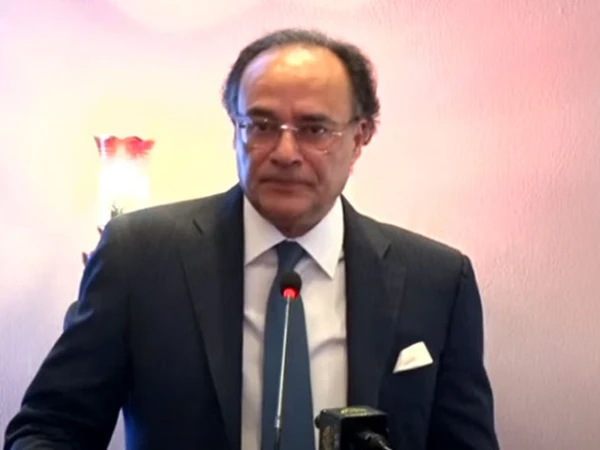
ISLAMABAD: Federal Finance Minister Muhammad Aurangzeb has held key meetings with delegations from JPMorgan, Sharjah Islamic Bank and the International Monetary Fund (IMF), discussing Pakistan’s credit rating, investment opportunities, financing options and ongoing economic reforms.
During a meeting with a JPMorgan delegation, the finance minister discussed Pakistan’s economic situation, credit rating prospects and financial strategy. He highlighted progress under the IMF programme, an increase in foreign exchange reserves and efforts to regain access to international capital markets, reaffirming the government’s commitment to structural reforms.

According to an official statement, the meeting also covered Pakistan’s ambition to achieve a double-B credit rating. JPMorgan offered analytical support regarding key economic indicators and institutional improvements.
The discussions explored various financing options, including sukuk, rupee-denominated instruments with dollar payments, Panda bonds and the potential tokenisation of Eurobonds.
Aurangzeb appreciated JPMorgan’s advice on the timing of financial transactions in view of global interest rate risks, investor engagement and underwriting support for private placements.
The meeting also reviewed financing backed by guarantees from the Multilateral Investment Guarantee Agency (MIGA), financing transactions based on detailed project reports with support from the International Finance Corporation (IFC), rupee-based financing and potential debt conversions. Other topics included stable remittance inflows, regional risks, debt swaps, credit support and guaranteed financing arrangements.
Sharjah Islamic Bank expresses interest in sukuk issuance
In a separate meeting with a delegation from Sharjah Islamic Bank, the finance minister discussed financing options, investment opportunities and the bank’s potential participation in Pakistan’s sukuk issuance.
Aurangzeb highlighted improvements in financial and external sector indicators, rising foreign exchange reserves, progress in credit ratings and developments under the IMF programme.
According to the statement, the discussions covered potential sukuk issuance, rupee-denominated financing with dollar payments, additional Panda bonds and the possibility of tokenising Eurobonds.
The minister stressed the importance of replacing expensive short-term borrowing with more favourable financing options and extending debt maturities without increasing the overall stock of external debt.
The two sides also discussed MIGA-backed financing and the rising global cost of obtaining funds.
The Sharjah Islamic Bank delegation reaffirmed its support for cooperation with Pakistan and expressed willingness to participate in sukuk issuance.
Aurangzeb also highlighted investment opportunities in refinery upgrades, the privatisation of power distribution companies and the outsourcing of airport management.
The meeting further explored establishing benchmark securities for capital markets and expanding credit availability for businesses, small and medium-sized enterprises (SMEs) and the agriculture sector.
Talks with IMF focus on economic performance and reforms
Meanwhile, the finance minister met Jihad Azour, Director of the IMF’s Middle East and Central Asia Department, to review Pakistan’s economic performance and reform agenda.
According to the official statement, the discussions covered revenue collection, inflation, economic growth and the current account position.
The two sides also reviewed Pakistan’s economic resilience amid regional conflict, energy procurement arrangements, advance preparations for the winter season and measures to ensure adequate fertiliser supplies for food security.
The meeting examined efforts to strengthen foreign exchange reserves, reduce forward foreign exchange liabilities, extend debt repayment maturities and ease external payment pressures.
Aurangzeb reaffirmed the government’s commitment to maintaining a primary fiscal surplus, reducing public debt and advancing tax reforms that support economic growth while protecting social expenditure.
The discussions also focused on strengthening economic resilience and credibility through continued privatisation, greater private-sector participation and export-led growth.
Both sides emphasised the importance of maintaining reform momentum, demonstrating political commitment and ensuring effective communication. The meeting also highlighted the close relationship between economic stability and national security.