EU Proposes European Security Council With UK, Ukraine, Norway and Canada
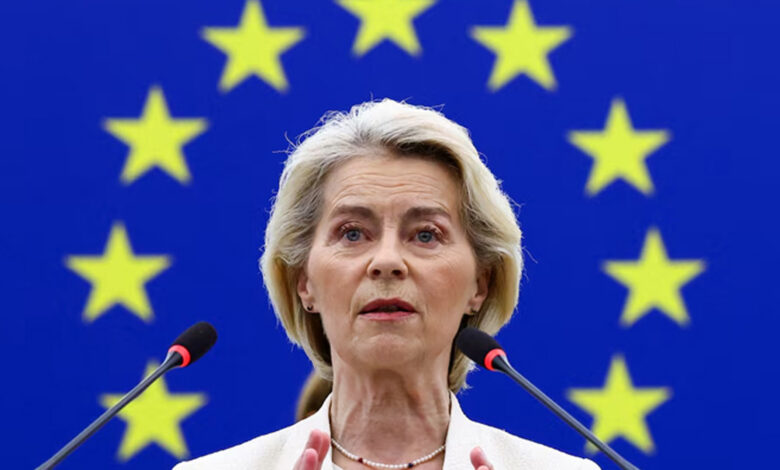
BRUSSELS:European Commission President Ursula von der Leyen has proposed the creation of a **European Security Council** involving European Union member states and key partner countries including the United Kingdom, Norway, Ukraine and Canada.
Von der Leyen made the proposal on Wednesday during her annual State of the Union address to the European Parliament, saying Europe needs to strengthen its ability to respond to growing security threats.


She said Europe needs its own “counter-hybrid playbook” to deal with incidents that fall below the threshold of conventional armed aggression but nevertheless pose serious threats to national security.
The European Commission president also proposed an **Emergency Security Protocol**, under which an EU member state facing a significant security threat could trigger a coordinated response involving other member states. The mechanism is intended to complement NATO’s existing Article 4 consultations rather than replace the alliance.
Von der Leyen cited a range of hybrid threats, including cyberattacks, sabotage, arson and drone incursions. She said Europe’s security institutions and decision-making mechanisms need to adapt to the changing nature of these threats.
She also said the proposed European Security Council would bring together EU leaders with partners such as Canada, Ukraine, the UK and Norway. The European Commission will set out further proposals aimed at making the council a reality.
The initiative comes amid heightened European concerns over hybrid security incidents and Russia’s war against Ukraine. Von der Leyen said recent incidents in several European countries demonstrated the need for stronger coordination. The EU has attributed a number of hybrid activities to Russia, although individual incidents can involve contested or developing evidence.
The proposals are also part of a broader push by European governments to strengthen the continent’s defence capabilities and strategic cooperation. At the same time, analysts and officials have raised questions about how the proposed structures would interact with NATO and existing European security mechanisms.