MQM-P Cancels November 29 Rally, Accuses PPP of Backing ‘Sindhudesh’ Agenda
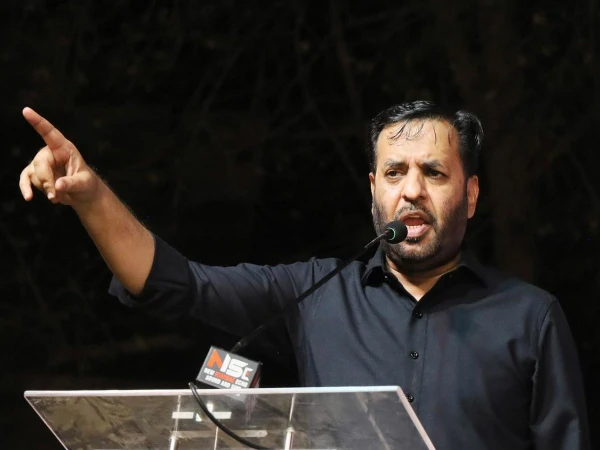
KARACHI: Muttahida Qaumi Movement-Pakistan (MQM-P) has accused the Pakistan Peoples Party (PPP) of allegedly supporting the creation of Sindhudesh and patronising its proxies, while announcing the cancellation of its November 29 rally in Karachi over security concerns and the denial of official permission.
Speaking at a press conference alongside senior party leader Syed Mustafa Kamal and MQM-P lawmakers, senior leader Dr Farooq Sattar said the Karachi commissioner had deprived the party of its democratic right by refusing permission for the rally, leaving it with no option but to call off the event.

Sattar said nationalist groups had planned to hold a rally on November 29 and argued that if the government had security concerns, it should have imposed a uniform ban on all political gatherings scheduled for that day.
He termed the Sindh government’s decision discriminatory and unfair, alleging that it had exposed the provincial government’s real intentions. He said the issue was not merely opposition to the creation of administrative units but an attempt to avoid administrative reforms and pave the way for a Sindhudesh agenda.
He claimed that nationalist parties were being allowed to gather and conduct political activities despite restrictions, while MQM-P had been denied permission to hold its rally. He also accused the provincial government of ignoring anti-Pakistan slogans allegedly raised at nationalist gatherings, including a rally held on November 22.
Sattar alleged that the PPP wanted to deprive the people of Sindh of their rights and said residents from Karachi to Larkana and Nawabshah deserved equal access to administrative facilities and resources.
He reiterated his party’s proposal to seek public opinion on the creation of administrative units through a referendum under Article 48(6) of the Constitution. He questioned why the government objected to allowing people to express their views on the issue.
The MQM-P leader said the creation of administrative units did not mean the geographical division of Sindh but was intended to distribute the administrative burden and improve public service delivery.
Criticising the provincial government’s 18-year rule, he questioned the state of development in Karachi, Hyderabad, Sukkur, Larkana and Mirpurkhas. He alleged that the government was opposing administrative reforms to conceal its governance failures.
Sattar also criticised the state of local government institutions, saying they had been deprived of powers and resources instead of being strengthened. He argued that the existing system had failed to deliver economic progress and effective administration.
He further alleged that a few influential families were trying to maintain their political monopoly and obstruct reforms to protect their interests.
Regarding the cancellation of the rally, Sattar said MQM-P had taken the decision in the broader interest of Karachi’s peace, stability, business and trade. He said the party feared that any untoward incident could be blamed on it.
He announced that the party would hold the rally on a new date in December, which would be announced later.
Mustafa Kamal says public safety comes first
Addressing the same press conference, Mustafa Kamal confirmed that MQM-P had postponed its November 29 rally, saying the movement for the creation of smaller administrative units was a major public-interest cause and had received considerable support.
He said the party would be willing to change the rally date even ten times if there was a risk to the life or property of any citizen. He added that law enforcement agencies had warned of a possible terrorist threat, while the government had also refused permission for the gathering.
Kamal said the possibility of a confrontation with participants of a nationalist rally was another reason for postponing the event. He stressed that MQM-P did not want its public movement to become controversial or turn into a source of violence and unrest.
He also criticised PPP Chairman Bilawal Bhutto Zardari over remarks he said suggested that bloodshed could occur in Karachi and Hyderabad. Kamal said the statement contained a serious warning and should not be taken lightly.
He alleged that people associated with the PPP were being used to advance the party’s political objectives and called for an investigation into the alleged role of political groups in creating tensions.
Referring to the violence following the assassination of former prime minister Benazir Bhutto on December 27, 2007, Kamal recalled incidents of arson, attacks on factories and commercial establishments, and the burning and looting of vehicles and banks in Karachi. He claimed that Urdu-speaking communities and their businesses had been selectively targeted during those days.
He also criticised the provincial government’s handling of law and order, alleging that citizens continued to lose their lives during mobile phone snatching incidents and other street crimes without effective action against the perpetrators.
Referring to the Gul Plaza tragedy, he said people had cried for help while families watched helplessly, accusing the authorities of failing to respond adequately.
“People are being killed in Karachi, but nobody seems to care. All this amounts to democratic terrorism,” Kamal said.
MQM-P calls for administrative reforms
Kamal maintained that smaller administrative units were necessary to address governance problems and improve service delivery. He said the demand was not based on language or ethnicity but on the need to provide citizens with better facilities and effective administration.
He said Sindhis, Pashtuns, Baloch, Muhajirs, Punjabis and Seraikis living in Karachi were all part of the same community and should not be viewed as opponents of one another.
According to him, the real division in Karachi was between the powerful and the oppressed, rather than between different ethnic groups. He said residents of all communities faced common problems, including water shortages, poor infrastructure and inadequate public services.
Kamal said the party’s next rally would bring together people from all ethnic backgrounds and social classes, from informal settlements to affluent neighbourhoods such as Defence and Clifton.
He also questioned the provincial government’s performance in providing basic facilities, particularly water supply, and alleged that even areas around Bilawal House depended on water tankers. He argued that improving water supply in Clifton would benefit the wider population.
Kamal further alleged that a Sindh government official had misappropriated Rs8 billion linked to a World Bank project, resulting in the suspension of funding. He said the matter had also been raised before the Supreme Court and questioned why the provincial leadership did not show similar concern over public grievances.
Both MQM-P leaders reiterated that their demand for smaller administrative units was aimed at improving governance and ensuring equal rights and facilities for people across Sindh.