Software Glitch Behind UK Air Travel Crisis, More Than 2,100 Flights Cancelled
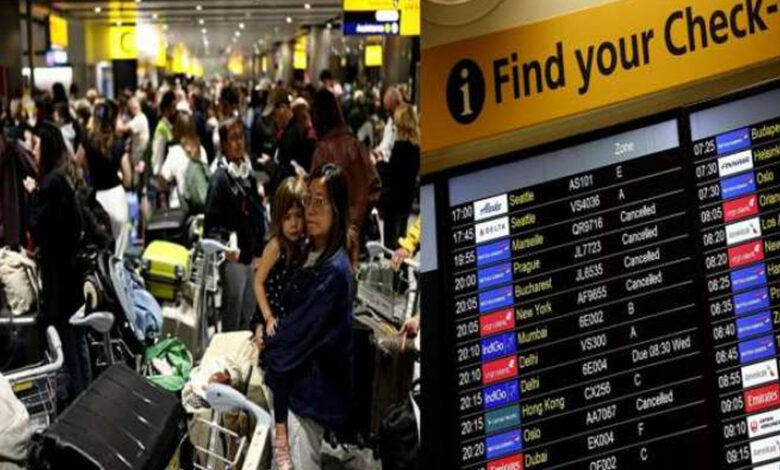
LONDON:A tiny software glitch was identified as the cause of last week’s major air travel disruption in the United Kingdom, affecting the country’s air traffic control system and resulting in the cancellation of more than 2,000 flights.
According to an investigation by the UK’s National Air Traffic Services (NATS), the problem occurred on September 8 in a small part of the national airspace system. The software fault was triggered by a specific combination of circumstances that occurred within just one millisecond, but its consequences were felt for several hours and the resulting disruption continued for more than two days.


According to the BBC, the NATS report said the problem occurred while the system was processing a manual request for an identification code for an aircraft. At the same time, a higher-priority activity message was received, temporarily interrupting the first process.
When the aircraft identification-code request resumed, a software error prevented the process from being restored correctly, causing some data to become corrupted. That information was subsequently being used to update flight data.
NATS said the entire technical failure occurred within “one millisecond.” However, it affected the information available to air traffic controllers. As passenger safety was prioritised, restrictions were imposed on air traffic while the system was restarted and flight data restored.
The restrictions remained in place for around six hours, and NATS said the system returned to normal operation that evening. However, by then, disruptions had spread across the UK and other parts of the world through systems connected to the affected network.
The investigation found that the problem continued to have an impact even after the system was restored. The cancellation of a large number of flights, disruption to aircraft and crew schedules, and the resulting buildup of passengers created a backlog that took more than two days to clear.
According to aviation data company figures, 1,746 flights were cancelled on September 8 and another 399 were cancelled on September 9, bringing the two-day total to **2,145 cancellations**. Industry body Airlines UK said more than **330,000 passengers** were affected.
British Airways was also heavily impacted, with around 550 flights cancelled, affecting the travel plans of approximately 85,000 passengers.
Flights between the United Arab Emirates and the UK were also disrupted. Etihad Airways said one flight from London to Abu Dhabi was cancelled, another was delayed, while a further flight was diverted to Paris. Passengers were subsequently rebooked and provided with alternative arrangements.
Emirates also confirmed disruptions to flights arriving at and departing from several UK airports and advised passengers to check the latest flight status before travelling.
NATS said its initial investigation had found no evidence of a cyberattack or deliberate sabotage. NATS Chief Executive Martin Rolfe said the incident was linked to a software coding error in a specific part of the air traffic control system.
He also clarified that the latest incident was unrelated to the major air traffic control disruption that occurred in 2023.
According to NATS, passenger safety was not compromised, as the number of flights was restricted as a precaution while the system was affected.
The UK government has not, however, treated the NATS findings as a final conclusion. Transport Secretary Heidi Alexander has instructed the Civil Aviation Authority (CAA) to conduct an independent review of the incident.
The review will examine NATS’s investigation, the resilience of the air traffic control system, future investment requirements and regulatory oversight. The CAA’s report is expected within six months.
NATS said the fault has been identified and temporary safety measures have been put in place, while testing and installation of a permanent software solution are ongoing.
Available next action: Create a downloadable PDF file here in this chat containing the findings and recommendations above