Sarawan Tribal Chiefs Demand Names of Sardars Receiving Establishment Favours Be Made Public
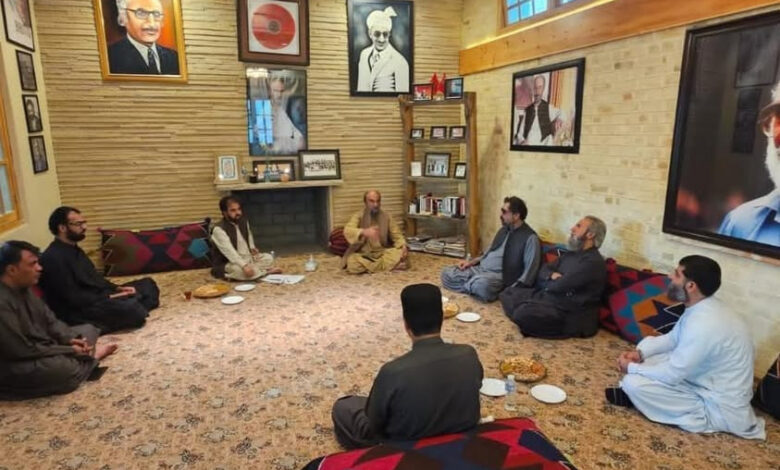
Quetta: A meeting of the Sarawan tribal chiefs, chaired by Chief of Sarawan Nawab Muhammad Aslam Khan Raisani, was held at Sarawan House on Sunday, where participants expressed strong criticism of recent remarks made by the Director General of Inter-Services Public Relations (DG ISPR) and discussed the political and security situation in Balochistan.
According to a statement issued after the meeting, which was attended by several tribal leaders including Nawab Muhammad Khan Shahwani, Sardar Kamal Khan Bangulzai, Sardar Azeem Jan Muhammad Shahi, and Sardar Asim Jan Sarparah, the participants described the DG ISPR’s press conference as “irresponsible, unrealistic, and contrary to ground realities.”


The meeting claimed that Balochistan is facing multiple challenges, including unemployment, insecurity, corruption, injustice, and economic hardships. Participants also alleged that if any tribal chiefs or nawabs had received privileges or benefits from the establishment, their names should be made public before the people of Balochistan.
The tribal leaders defended the traditional tribal system in Balochistan, stating that it has historically played a central role in protecting the region’s social order, identity, and collective unity. They rejected claims linking the tribal structure solely to colonial-era policies, asserting that the system predates British rule and remains deeply rooted among the people.
The meeting further criticized what it described as attempts to undermine Balochistan’s tribal structure and raised concerns over issues including missing persons, law and order, corruption, and governance in the province. Participants also opposed discussions regarding the creation of new provinces, arguing that Pakistan was formed through the federation of national units with distinct histories, cultures, and identities.
The attendees urged state institutions to focus on addressing Balochistan’s longstanding issues and called for an end to what they termed the distribution of “treason certificates” against political and nationalist figures. They maintained that resolving the province’s challenges requires attention to public grievances and respect for its historical and social realities.