Fazlur Rehman Urges Dialogue with Public Action Committee, Warns Against Escalating Tensions
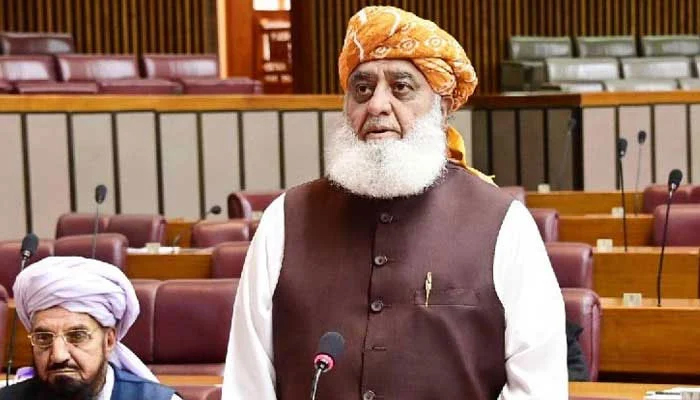
Islamabad: Jamiat Ulema-e-Islam-F (JUI-F) chief Maulana Fazlur Rehman has called for dialogue with the Public Action Committee, saying the government should engage with the group’s demands rather than allowing tensions to escalate.
Speaking during a session of the National Assembly, Fazlur Rehman said the Public Action Committee had contacted him and sent a formal letter outlining its concerns. He added that he had forwarded the letter to the government but had not yet received any response.


“The Public Action Committee reached out to me and sent an official letter. I forwarded it to the government, but there has been no reply so far,” he told lawmakers.
The JUI-F chief noted that a large number of people were gathered in Rawalakot and stressed the importance of resolving issues through negotiations. He urged the authorities to carefully review the committee’s charter of demands and avoid responding with force based solely on speeches delivered by protesters.
Fazlur Rehman also welcomed the committee’s decision to postpone its planned march toward Muzaffarabad, describing the move as a positive step that could create space for meaningful dialogue.
Commenting on recent remarks made by Defence Minister Khawaja Asif, Fazlur Rehman said such statements should not have been made in an official capacity. He argued that inflammatory comments could further increase tensions and complicate efforts to reach a peaceful resolution.
“You have assigned confrontation to Khawaja Asif and reconciliation to Ishaq Dar,” he remarked, adding that statements of this nature risk aggravating an already sensitive situation.
The opposition leader also cautioned the government against provoking the opposition, highlighting JUI-F’s recent large public gathering in Charsadda. He challenged the ruling party to demonstrate a similar level of public support.
Concluding his remarks, Fazlur Rehman emphasized the need for patience and restraint during a difficult period.
“Many emotional statements have been made in this House, but this is a time for tolerance and wisdom. If the government responds emotionally, it does not reflect the responsibility expected of those in power,” he said.
He reiterated that constructive engagement and dialogue remain the most effective way to address public grievances and maintain stability.