Political Governments Arrest People First and Decide Charges Later, Says Khawaja Asif
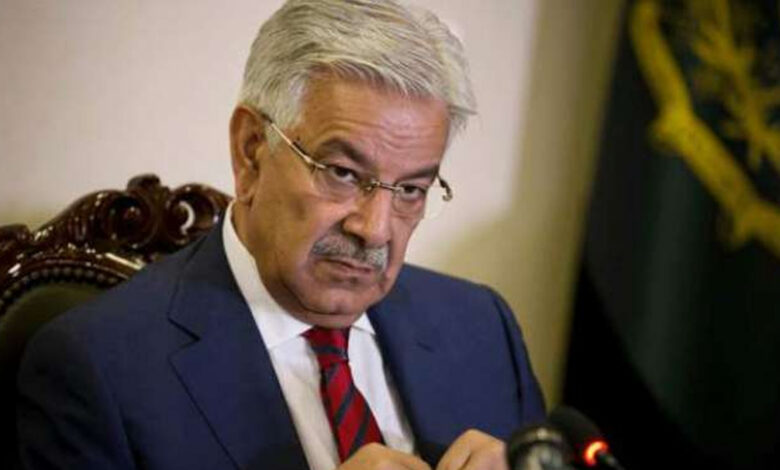
SIALKOT:Defence Minister Khawaja Asif has criticised the practice of making arrests before determining charges, saying that even those who had imprisoned him could not explain what allegations he was facing.
“Political governments first arrest a person and then think about what charges to bring against him,” he said, adding that he had sometimes felt tired of politics but recently realised he still had the strength to continue.
The defence minister was speaking at the annual convocation of the University of Central Punjab in Sialkot, where he attended as the chief guest. He congratulated the graduating students and said educated and skilled young people could play a central role in the country’s development.
Asif said several educational institutions had honoured him during his political career. He also stressed that young people were Pakistan’s valuable asset and that the education sector had continued to evolve over time.
### Pakistan’s International Standing
Speaking about Pakistan’s international position, the defence minister said the country now enjoyed a prominent standing globally.
He claimed that following the “Battle of Haq”, Pakistan had achieved a diplomatic position that it had not attained during the previous 78 years.
He said Pakistan had shown the Muslim world a new direction, arguing that foreign military bases could not guarantee a country’s security.
“Overseas bases are established to protect personal interests, while real security comes from one’s own strength and capabilities,” he said.
Asif also claimed that Pakistan had defeated an enemy five times larger than itself. He said Pakistan had played a key role in reducing differences between Iran and Arab countries.
### Criticism of Arrests and Accountability System
Discussing his political career, Asif said he had always respected educational institutions and avoided political discussions at such events.
He said the people of Sialkot had consistently given him great respect during his 36-year political career. During this period, he had been imprisoned four to five times and had spent time in police custody on several occasions.
He said he had remained in jail for seven months during the PTI government, but the authorities had failed to present evidence in support of the case against him.
Criticising the National Accountability Bureau (NAB), he said the institution’s problem was that it first arrested people and then considered what cases could be filed against them.
He described this practice as a recurring feature of Pakistan’s 78-year history.
Asif said he had occasionally felt exhausted by politics. However, after responding to a statement by Maulana Fazlur Rehman in the National Assembly recently, he realised that he still had considerable energy to remain politically active.
He added that he had repeatedly called on politicians to hold themselves accountable.
### Comments on Military Leadership and Regional Diplomacy
Referring to the military leadership, Asif said Pakistan’s progress was continuing under the leadership of Field Marshal Syed Asim Munir.
He said Pakistan had been fighting terrorism for decades and was also playing an active and important role in efforts to maintain a ceasefire between Iran and the United States.
The defence minister claimed that Indian leaders had acknowledged their country’s defeat following the “Battle of Haq”. He further said US President Donald Trump had mentioned India’s defeat 11 times and the downing of Indian fighter jets 70 times.
Asif said previous wars between Pakistan and India had left some ambiguity, but he described the latest conflict as one in which, according to him, there was no ambiguity about the outcome.
He claimed that India and its military had acknowledged the defeat, calling it a major achievement for Pakistan. He also praised the armed forces for their years-long fight against terrorism.
### Emphasis on Education and Youth
The PML-N leader said he had urged lawmakers in the National Assembly to reform the country’s curriculum.
He remarked that many politicians were reluctant to take charge of the education ministry, considering it an unimportant portfolio.
Asif reiterated that educated and skilled young people were essential for national progress and called on the country to invest in its youth and education system.
Tighten the article for news styleReplace repetition with concise wording